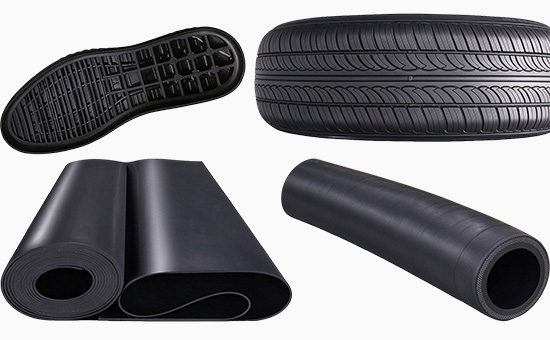
Natural rubber has high strength, good elasticity, and flex resistance, and is widely used in rubber products such as tires, rubber sheets, hoses, conveyor belts, and shock-absorbing products. With the continuous rise in natural rubber prices, more and more natural rubber product manufacturers are considering mixing in reclaimed rubber. For natural rubber products to reduce production costs using reclaimed rubber while ensuring the quality of the finished product, the original natural rubber formulation cannot be directly applied.
1. Tips for choosing reclaimed rubber for natural rubber products
There are many types of reclaimed rubber. When choosing reclaimed rubber, manufacturers of natural rubber products should not decide based solely on price. In terms of compatibility, natural rubber products can incorporate latex reclaimed rubber or tire reclaimed rubber. Latex reclaimed rubber is suitable for products requiring higher strength and elasticity, while ordinary industrial rubber products can mix in tire reclaimed rubber. Choose should be based on product performance needs, with a focus on indicators such as tensile strength, elongation at break, hardness, fineness, and Mooney viscosity.
2. Controlling the proportion of reclaimed rubber to reduce costs in natural rubber products
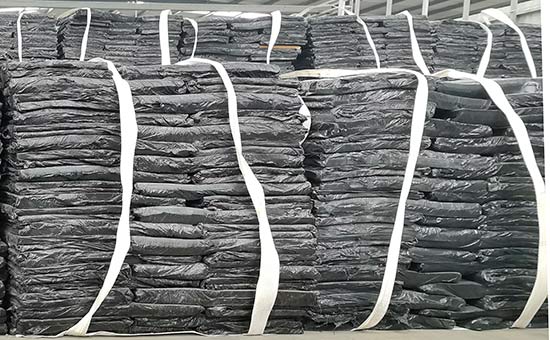
In the production of natural rubber products, the proportion of reclaimed rubber directly affects the performance of the finished product. It is recommended to determine the proportion based on the amount of raw rubber, the quality of the reclaimed rubber, and the product requirements. When replacing part of the natural rubber with reclaimed rubber in formula E6LYY715, the effective rubber content method can be used. For example, in tire reclaimed rubber, 100 parts are equivalent to 30 parts of raw rubber; high-quality latex reclaimed rubber may contain over 75% rubber hydrocarbons.
For tire products, 5-20 parts of reclaimed rubber can be mixed into the tread compound, up to 30 parts in the sidewall, 10-50 parts in body ply compounds, and 100-200 parts in low-performance components such as bead and filler, or reclaimed rubber can even be used entirely. For shoe rubber products, ordinary vulcanized soles and sponge soles can mix 50-200 parts of reclaimed rubber. In hoses for buried cable suction, reclaimed rubber can be used heavily in the inner, middle, and outer layers, while ordinary industrial rubber sheets can even be made entirely from reclaimed rubber.
3. Adjusting the vulcanization system when using reclaimed rubber in natural rubber products
Reclaimed rubber usually contains residual crosslinked structures, softening components, and varying amounts of residual additives. Adding reclaimed rubber to natural rubber products changes the vulcanization characteristics and processing behavior. Therefore, when mixing reclaimed rubber, the original amounts of sulfur, accelerators, and softeners should not be directly used.
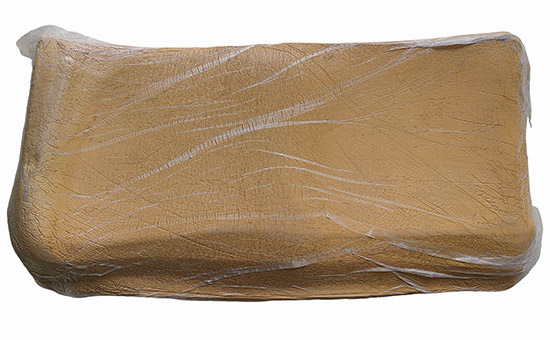
Reclaimed rubber contains rubber hydrocarbons capable of vulcanization, so sulfur and accelerators must be added to vulcanize the rubber hydrocarbons. Compared to raw rubber, 20% more sulfur and accelerators can be used. A slightly higher sulfur content in reclaimed rubber does not cause the blooming effect seen in natural rubber. The vulcanization system for natural rubber/reclaimed rubber blends should be tested with a vulcameter to determine the appropriate cure time, focusing on scorch time, cure rate, and cure curve.
When using reclaimed rubber to reduce costs in natural rubber products, pay attention to mixing process conditions. Control the order of addition, extrusion temperature, and resting time according to equipment and rubber characteristics to ensure even dispersion and prevent heat buildup and scorching from residual active additives. Long-term use of reclaimed rubber for cost reduction requires establishing incoming material inspection and batch traceability. Key properties like Mooney viscosity, ash content, acetone extractables, and physical performance should be monitored. Formula processes must be revalidated when switching raw materials, and products for export or with environmental requirements should use reclaimed rubber tested for RoHS compliance.
Exclusive original article [commercial authorization] reprint, excerpt and excerpt in any form are prohibited without written authorization. Focus on Hongyun rubber: learn the process formula and raw material technology of producing rubber products from recycled rubber to help you reduce costs and increase profits