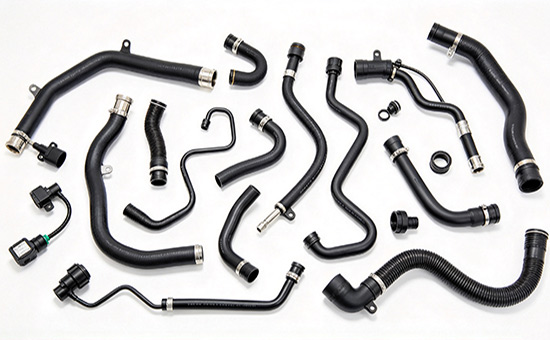
Car radiator hoses need to be in long-term contact with high-temperature coolant during operation, withstand temperature fluctuations, system pressure, and repeated thermal cycling, which places strict requirements on the heat resistance, coolant resistance, aging resistance, and sealing performance of the rubber material. They are generally made mainly from EPDM (ethylene propylene diene monomer) rubber. Recycled EPDM rubber retains the basic performance characteristics of virgin EPDM and can partially replace it in radiator hose production to reduce material costs.
1. Advantages of using recycled EPDM rubber in car radiator hoses
Recycled EPDM rubber has the basic properties of virgin EPDM: it resists high and low temperatures, ozone, and aging extremely well, and is highly compatible with virgin EPDM. It can be used in any ratio with EPDM rubber to produce rubber products, improving processing performance and reducing raw material costs. For medium- and low-pressure, non-critical parts like heater hoses or auxiliary coolant hoses, the ratio of recycled EPDM can be appropriately increased.
2. Key points for choosing recycled EPDM for car radiator hoses
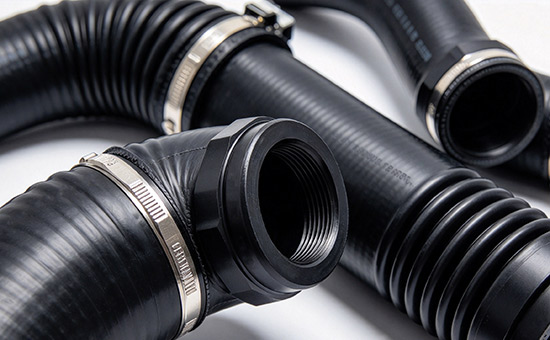
When choosing recycled EPDM for radiator hoses, it’s important to match the recycled rubber’s properties with the hose’s specific processing and performance requirements, especially the rubber content, tensile strength, fineness, Mooney viscosity, ash content, volatiles, and impurities. It’s recommended to prioritize recycled EPDM with high rubber content, high fineness (60–80 mesh), and no impurities to ensure a smooth extruded surface and dimensional stability, avoiding components like impurities and volatiles that might affect the hose’s sealing and durability.
3. Controlling the proportion of recycled EPDM in radiator hoses
When producing car radiator hoses by combining recycled EPDM with virgin EPDM, the proportion of recycled rubber should be determined based on the hose’s operating temperature, pressure rating, coolant resistance, and mechanical performance.

As the amount of recycled EPDM increases, material properties such as tensile strength, elongation at break, tear resistance, and compression set may change, depending on the quality of the recycled material and the formulation. It’s recommended to start with a lower proportion and make gradual adjustments through small-scale trials, focusing on hardness, tensile strength, elongation at break, tear strength, compression set, as well as finished hose performance, including pressure resistance, pulse fatigue, and thermal aging.
4. Vulcanization system design for recycled EPDM radiator hoses should balance processing safety
When producing radiator hoses with a mix of virgin and recycled EPDM, a sulfur-accelerator system can be used, with accelerators such as thiazoles, sulfonamides, or guanidines. Both M and DM are thiazole accelerators, but M reacts faster in vulcanization with a shorter scorch time, while DM offers better processing safety and cure evenness. Sulfonamide accelerators like CZ and NS have different delayed effects and can adjust scorch safety and vulcanization speed. Peroxide vulcanization can also be used for radiator hoses, but the accelerator combination from the sulfur system shouldn’t be copied directly.
5. Key points on mixing recycled EPDM for radiator hose production
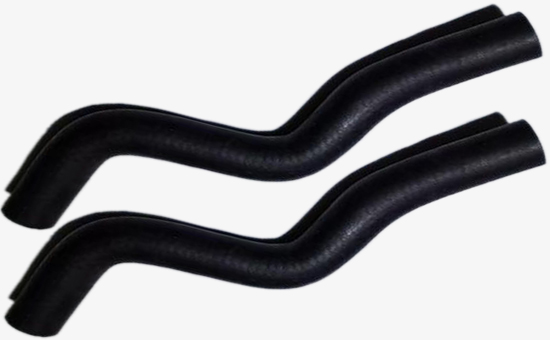
When using a mix of virgin and recycled EPDM as the main material for radiator hoses, special attention should be paid to the order of ingredient addition, mixing temperature, time, and discharge temperature to avoid local overheating, scorching, or fluctuation in processing performance. Vulcanizers and accelerators should be added at appropriate stages according to process conditions to ensure uniform dispersion, with batch testing to control consistency.
For car radiator hose manufacturers, the key to reducing costs with recycled EPDM is not simply adding more, but finding the right balance among recycled rubber quality, formulation performance, processing stability, and product service life.
Exclusive original article [commercial authorization] reprint, excerpt and excerpt in any form are prohibited without written authorization. Focus on Hongyun rubber: learn the process formula and raw material technology of producing rubber products from recycled rubber to help you reduce costs and increase profits