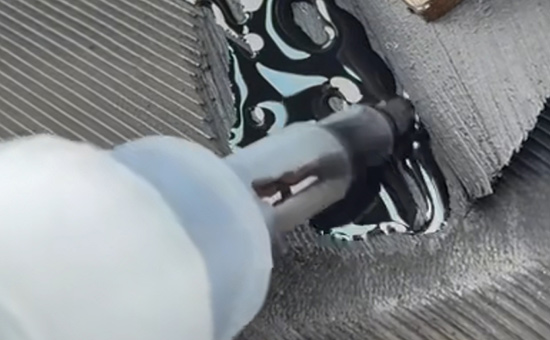
Adhesives made primarily from natural rubber as the main raw material have good initial tack and flexibility and are widely used in areas such as shoe materials, leather, paper products, and fabric bonding. However, the price of natural rubber raw materials fluctuates greatly and is relatively high, which has long limited the profit margin for adhesive manufacturers. In actual production, can recycled rubber replace natural rubber to produce adhesives? Which recycled rubbers are more suitable for reducing costs in natural rubber adhesives?
1. Can recycled rubber replace natural rubber in producing adhesives?
Recycled rubber is processed from waste vulcanized rubber through physical and chemical processes like crushing, heating, and mechanical treatment, turning it from an elastic state into a material with certain plasticity and stickiness, capable of being re-vulcanized E6LYY319. The vulcanized recycled rubber introduces more polar groups while forming a highly cross-linked structure. Compared with natural rubber adhesives, it does not negatively affect the bonding strength of rubber to metal products and also has good aging resistance and heat resistance.
2. Which recycled rubbers can replace natural rubber in producing adhesives?
(1) Latex Recycled Rubber
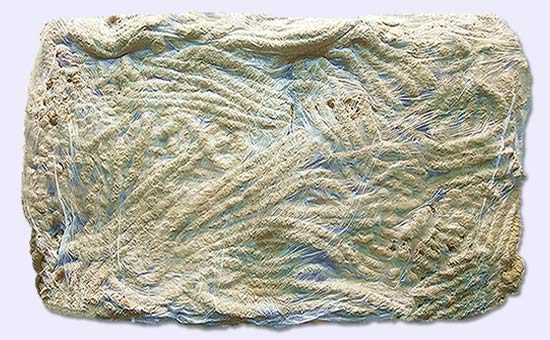
Latex recycled rubber is made from waste natural rubber cup gum strings and used latex gloves, among other materials. It has excellent compatibility with natural rubber and is an ideal substitute in natural rubber adhesives; using latex recycled rubber reasonably to replace part of the natural rubber in adhesives has little impact on initial tack and holding power, reduces costs, and significantly improves the plasticity and flow of the adhesive, making it less prone to bubbles and incomplete coverage during calendering and coating.
(2) Isoprene Recycled Rubber
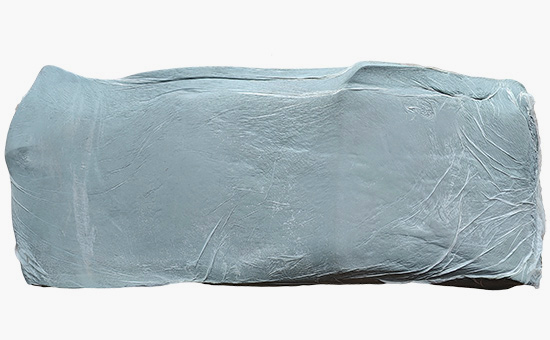
Soft isoprene recycled rubber is mainly made from unvulcanized compounded rubber, processed through sorting, washing, crushing, and superfine 80-mesh filtering. It features aging resistance, high and low temperature resistance, strong stickiness, high elongation at break, good air tightness, and high tear strength. Its physical properties are close to natural rubber, making it widely usable in natural rubber adhesives, effectively lowering raw material costs.
(3) Tire Recycled Rubber
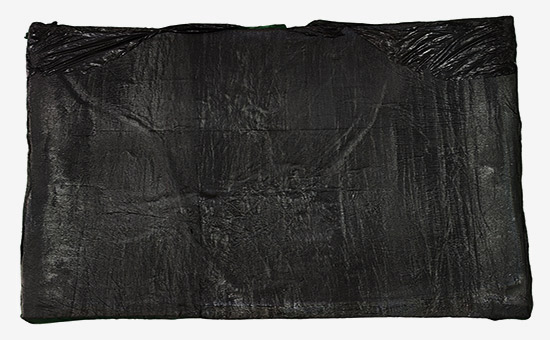
Tire recycled rubber is made from waste tire rubber powder, retaining part of the rubber molecular chain structure. It has basic adhesion and film-forming capabilities, with main components being natural rubber, styrene-butadiene rubber, and carbon black. It is low-priced, compatible with natural rubber, and can replace part of natural rubber in making black industrial adhesives, construction sealants, and pressure-sensitive adhesive bases where appearance is not critical. Necessary tackifiers like benzofuran resin, rosin derivatives (high acid value), or zinc resin acid can be added to improve initial adhesion.
When using recycled rubber to reduce costs in natural rubber adhesives, the principle of 'material choose based on need and reasonable blending' should be followed. Compared with pure natural rubber adhesives, adhesives containing recycled rubber are cheaper, have good adhesion, are aging-resistant, easy to apply, and easy to extrude. Currently, adhesives made from recycled rubber can be divided into two types: one disperses recycled rubber in an aqueous medium; the other disperses recycled rubber in a suitable organic solvent. We can discuss related issues further later on.
Exclusive original article [commercial authorization] reprint, excerpt and excerpt in any form are prohibited without written authorization. Focus on Hongyun rubber: learn the process formula and raw material technology of producing rubber products from recycled rubber to help you reduce costs and increase profits