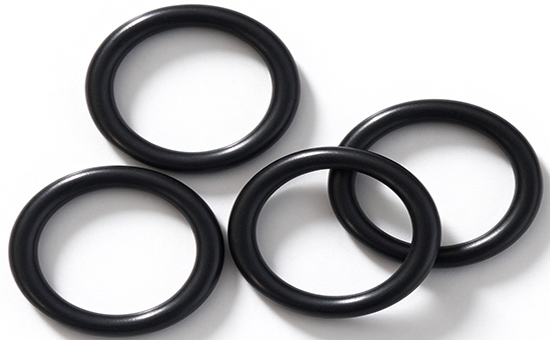
Nitrile rubber is polymerized from acrylonitrile and butadiene monomers, and has excellent oil resistance, wear resistance, and heat resistance, making it an ideal raw material for producing oil-resistant O-rings. Nitrile reclaimed rubber retains the basic properties of nitrile rubber, with better plasticity and flowability than virgin nitrile rubber. It can be used together with nitrile rubber to produce oil-resistant O-rings, improving the processing performance of the compound and reducing raw material costs. By reasonably designing the formula for combining nitrile rubber and nitrile reclaimed rubber, oil-resistant O-rings of different hardness can be produced.
1. Strictly control the proportion of nitrile reclaimed rubber in the oil-resistant O-ring
When using nitrile reclaimed rubber in oil-resistant O-rings made mainly from nitrile rubber to reduce costs, the proportion of reclaimed rubber is key to balancing the properties and costs of the rubber used. Too little dosing makes it difficult to improve processing performance and reduce raw material costs; Too much dosing reduces the crosslinking density, tensile strength, and elasticity of the compound, and reduces the compressive deformation resistance and service life of the O-ring. The dosing ratio of nitrile reclaimed rubber in oil-resistant O-rings should be reasonably determined based on the target hardness, working conditions, and quality of the reclaimed rubber (such as rubber content, tensile strength, hardness, etc.), generally controlled among 10 and 50 parts.
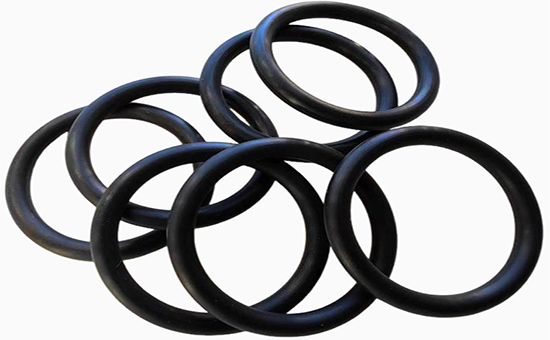
In actual production, oil-resistant O-rings used under static sealing conditions require lower strength and elasticity, so the amount of nitrile reclaimed rubber can be appropriately increased; Dynamic seals withstand friction, tensile, and compression option effects and require good wear resistance, tear resistance, and elasticity; the reclaimed rubber dosage should be ≤ 30 parts; For applications with stringent oil resistance requirements, it is recommended to select nitrile reclaimed rubber with high acrylonitrile content and good oil resistance, and reasonably control the proportion of reclaimed rubber used.
2. Key points for designing a reinforcement and filling system using nitrile rubber/nitrile reclaimed rubber to produce oil-resistant O-rings with different hardness
Carbon black is an important reinforcing agent for adjusting the hardness of rubber products. When producing rubber O-rings using nitrile rubber/reclaimed nitrile rubber together with rubber, N550 offers good reinforcement and processing properties, making it suitable for medium to high hardness nitrile rubber products; Relatively soft carbon blacks such as N774 and N990 can be used to adjust the hardness and processing characteristics of rubber materials.
It should be noted that although adding carbon black can improve hardness and elongation stress, excessive addition increases the viscosity of the compound, affects flowability and mold cavity filling, and may also reduce elongation at break; Therefore, when adjusting the hardness of the O-ring of nitrile reclaimed rubber with carbon black, attention must also be paid to changes in tensile strength, tear strength, and compression permanent deformation.
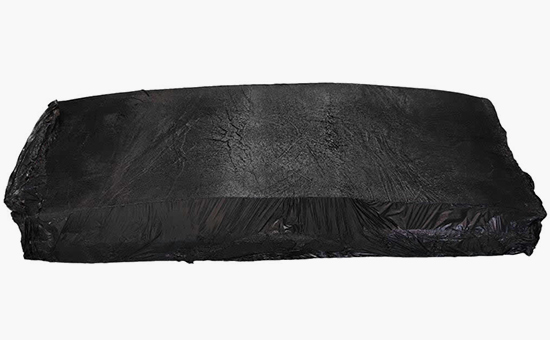
3. Key points for designing a plasticizing system for softening and plasticizing oil-resistant O-rings with different hardness using nitrile rubber/reclaimed nitrile rubber
When producing oil-resistant O-rings using nitrile rubber/nitrile reclaimed rubber as the main raw material, improper selection of plasticizer directly affects the volume change of the O-ring in the oil medium and its long-term sealing performance. Priority should be given to softening plasticizers that are compatible with nitrile rubber and nitrile reclaimed rubber. DOP is the most commonly used plasticizer, which can improve the softness and processing performance of nitrile rubber and nitrile reclaimed rubber, and can be selected according to the oil in contact, working temperature, and the requirements for medium extraction.
4. Key design points for the vulcanization system of different hardness and oil-resistant O-rings produced by combining nitrile rubber and nitrile reclaimed rubber
Oil-resistant rubber O-rings remain compressed for long periods during operation, and the vulcanization system directly affects their elastic recovery ability and sealing life. When producing oil-resistant O-rings using nitrile rubber and reclaimed nitrile rubber together E6LYY783 a sulfur-accelerator system is often used, with CZ selected as the main accelerator and a small amount of TMTD adjusted for vulcanization speed; For products requiring high permanent compression deformation, low-sulfur, high-promoter or effective vulcanization systems can be chosen, and the promoter-to-sulfur ratio can be adjusted according to the actual vulcanization characteristics of nitrile reclaimed rubber.
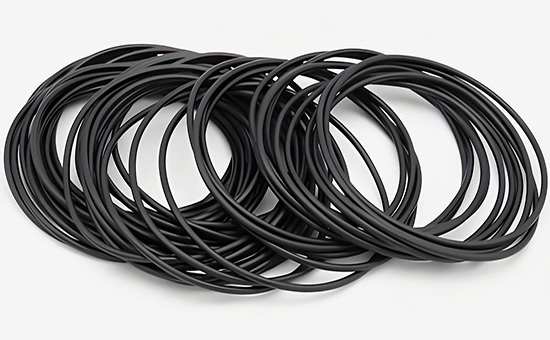
It should be noted that reclaimed nitrile rubber may contain residual vulcanizing agents, accelerators, and active substances, which affect the vulcanization rate. Therefore, when designing the O-ring vulcanization system, the dosage of vulcanizing agents and accelerators should be appropriately adjusted.
In actual production, the oil-resistant O-ring formula for low-hardness nitrile reclaimed rubber can appropriately reduce the amount of reinforcing carbon black and increase plasticizers, giving the compound better softness and adhesion; The medium-hardness formula can appropriately increase the amount of carbon black and reduce plasticizers, balancing sealing, mechanical strength, and processability; The high-hardness formulation suggests further increasing the amount of reinforcing carbon black, reducing plasticizers, and improving the compound's elongation stress and extrusion resistance.
When producing oil-resistant O-rings of different hardness using nitrile rubber and nitrile reclaimed rubber together, it is not enough to consider only the reclaimed rubber dosage ratio; it is also necessary to reasonably design reinforcement, softening, and vulcanization systems based on the working pressure, medium, temperature, compression deformation, and sealing requirements of the O-rings.
Exclusive original article [commercial authorization] reprint, excerpt and excerpt in any form are prohibited without written authorization. Focus on Hongyun rubber: learn the process formula and raw material technology of producing rubber products from recycled rubber to help you reduce costs and increase profits