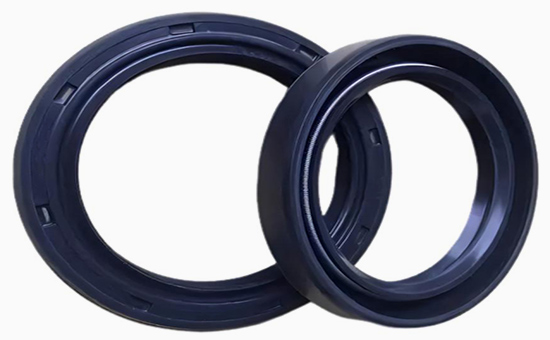
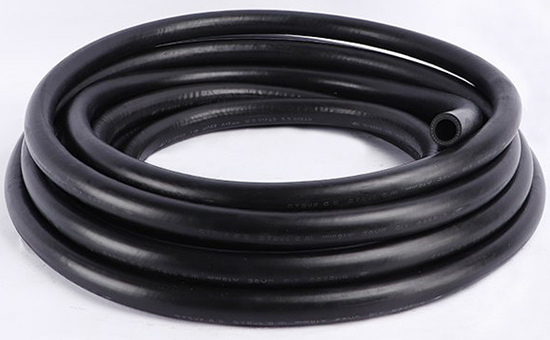
Nitrile reclaimed rubber has excellent oil resistance as well as good heat and wear resistance, and is widely used in oil seals, sealing rings, rubber tubes, sealing strips, and other rubber products to reduce raw material costs. When producing rubber products with nitrile reclaimed rubber, correctly understanding formulation design principles and reasonably choosing additives from various systems are key to reducing raw material costs, improving the processing performance of rubber materials, and enhancing product quality.
1. The vulcanization system of nitrile reclaimed rubber products needs to be adjusted according to the condition of the reclaimed rubber
When producing rubber products with nitrile reclaimed rubber, the vulcanization system directly determines the degree of crosslinking, hardness, tensile strength, and permanent compression deformation of the reclaimed rubber product, with sulfur being the most commonly used vulcanizing agent; For products with high requirements for heat resistance and compression deformation resistance, sulfur carriers, organic peroxides, or resin vulcanization systems can also be considered based on the type and usage conditions; General vulcanization accelerators have a good effect on promoting vulcanization of nitrile reclaimed rubber.
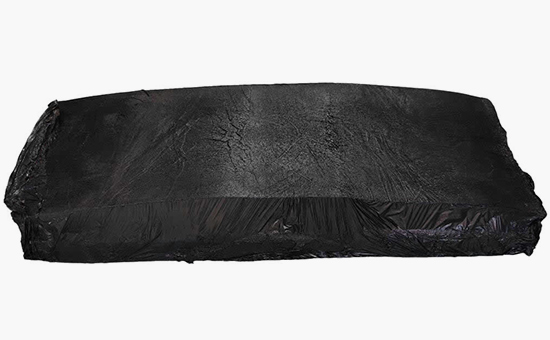
It should be noted that the residual vulcanization system of the nitrile reclaimed rubber itself will have some impact on the new vulcanization cycle. If the amounts of vulcanizing agents and accelerators are still strictly designed according to the original rubber system, issues such as shortened scorch time, excessive vulcanization speed, or changes in the vulcanization curve may occur; It is recommended to determine the reasonable dosage based on the Mooney viscosity, vulcanization characteristics, and combined usage ratio of nitrile reclaimed rubber, and never rely solely on experience to increase sulfur and accelerators.
2. The design of reinforcement and filling systems for nitrile reclaimed rubber products must balance performance and cost
When producing rubber products using nitrile reclaimed rubber as the main raw material, the reclaimed rubber itself needs to rely on a reinforcement system to achieve sufficient physical and mechanical properties. Carbon black is the most commonly used reinforcing E6LYY58, and different particle sizes and structures significantly affect hardness, tensile strength, wear resistance, and processing performance; Calcium carbonate and kaolin are commonly used fillers. Proper use of reinforcing agents and fillers is of great significance for improving the physical and mechanical properties of nitrile reclaimed rubber products, extending service life, and reducing production costs.
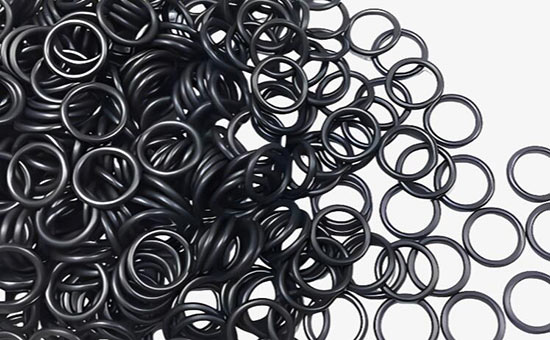
When producing sealing rings, oil seals, and other products with high requirements for wear resistance and strength, carbon black with good reinforcement can be chosen; For low-cost rubber products such as ordinary sealing strips and rubber sheets, semi-reinforced carbon black, calcium carbonate, and other fillers can be used appropriately according to performance indicators. It should be noted that more fillers are not always better; After the proportion of nitrile reclaimed rubber increases, if low-cost fillers are further increased, it can easily lead to decreases in tensile strength, elongation, and fatigue resistance.
3. The design of the softening and plasticizing system for nitrile reclaimed rubber products focuses on solving processing issues
The use of additives in the softening plasticizer system can effectively improve the processing performance of nitrile reclaimed rubber products. Especially when nitrile reclaimed rubber is used together with high menitinary nitrile rubber, improper choose of softeners and plasticizers can easily lead to rough extrusion surfaces, difficulty in compounding, and hardening of the compound; Plasticizers and softeners can reduce the viscosity of nitrile compounds, improve mixing, calendering, and extrusion performance, while also affecting low-temperature flexibility, elasticity, and the adhesion of the compound.
When choosing a softener for nitrile reclaimed rubber products, it is necessary to comprehensively consider the product's oil resistance requirements and avoid using softening plasticizers that do not match the product's properties. Common plasticizers include di-butyl phthalate and dioctyl phthalate; coumalong resin can improve the adhesion of the compound. When using nitrile reclaimed rubber to produce oil-resistant seals such as oil seals and oil-resistant sealing rings, the amount of softener should not be excessively increased to reduce costs, as this may cause reduced hardness of the vulcanized rubber, increased changes in oil-resistant volume, and even affect sealing performance.
4. The anti-aging system design for nitrile reclaimed rubber products needs to be determined based on the product's usage environment
When producing rubber products with nitrile reclaimed rubber, it is necessary to choice an appropriate antioxidant system based on the product's operating temperature, contact medium, and service life. Pay attention to the compatibility among the antioxidant, vulcanization system, and fillers. It is recommended to use two or more antioxidants together to avoid frosting. Common thermal oxygen antioxidants for nitrile reclaimed rubber products include antioxidants A, RD, BLE; OZONE-RESISTANT antioxidants include 4020, 4010NA, etc.; fatigue-resistant antioxidants include H and 4020; physical antioxidants include paraffin wax (microcrystalline wax).
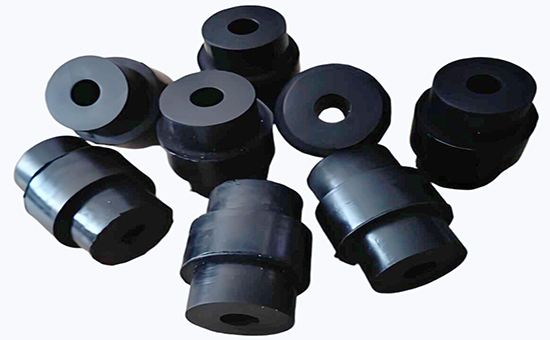
When using nitrile reclaimed rubber to replace nitrile rubber in the production of various rubber products, formula design should not simply replace base rubber with reclaimed rubber. Instead, appropriate indicators should be chosen based on the performance requirements of rubber products. The vulcanization system, reinforcement and filling system, softening and plasticizing system, and anti-aging system should be reasonably designed, and the characteristics of reclaimed rubber should be reasonably matched with reclaimed rubber additives, thereby reducing raw material costs while maintaining processing stability and product quality.
Exclusive original article [commercial authorization] reprint, excerpt and excerpt in any form are prohibited without written authorization. Focus on Hongyun rubber: learn the process formula and raw material technology of producing rubber products from recycled rubber to help you reduce costs and increase profits