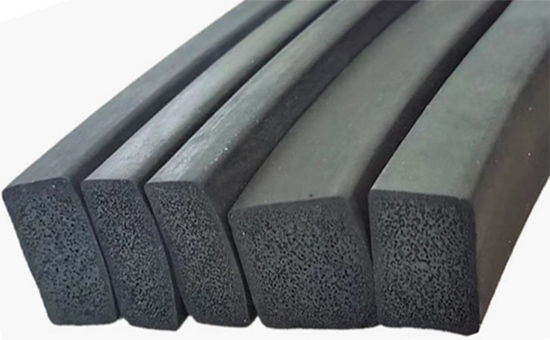
Nitrile reclaimed rubber is made by desulfurizing and recycling waste nitrile rubber products, retaining the basic properties of nitrile rubber. It has excellent oil resistance and can fully or partially replace nitrile rubber in producing sponge foam sealing strips. The finished products have good oil resistance, soft texture, waterproof and shock-absorbing properties, and are widely used in automotive, industrial equipment, construction, and other fields. What should be noted when using nitrile reclaimed rubber in foamed sealing strips? How to Improve the Quality of Finished Nitrile Reclaimed Rubber Foam Sealing Strips?
1. Tips for selecting nitrile reclaimed rubber for sponge foam sealing strips
When selecting nitrile reclaimed rubber for foamed sealing strips, it is necessary to select an appropriate acrylonitrile content reclaimed rubber based on the medium's oil resistance requirements. For high oil resistance, choose medium high acrylonitrile (>40%), and for cold resistance, select acrylonitrile (30%-40%); For shock absorption, nitrile reclaimed rubber above 60 mesh is used, free of impurities and clumping, preventing bubbles or uneven bubble sizes during foaming, balancing vulcanization and foaming rates, and preventing defects. Foam sealing strips should avoid using high-viscosity nitrile reclaimed rubber, as this may cause difficulty in foaming or excessive density.
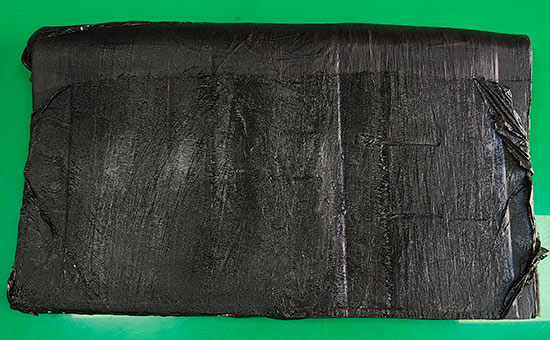
2. Key points for formula design for foamed sealing strips in the production of nitrile reclaimed rubber
(1) Design of the foaming system for the foaming of nitrile reclaimed rubber foaming sealing strips
Closed-cell nitrile reclaimed rubber foam sealing strips use AC as the main foaming agent, combined with OBSH as the auxiliary foaming agent, resulting in a wide foaming temperature window and uniform and dense foam structure; Perforated foam sealing strips can be made by combining foaming agent H and sodium bicarbonate, producing more gas and lower cost. Adding 0.5-1 part of zinc stearate to the formula of nitrile reclaimed rubber foam sealing strips can improve the dispersion of the foaming agent and prevent local over-foaming.
(2) Design of the vulcanization system for the foamed sealing strip of nitrile reclaimed rubber
The vulcanization speed of the nitrile reclaimed rubber foam sealing strip must match the foaming speed. The vulcanization system mostly uses a sulfur-accelerator system, with sulfur dosage not too high to avoid sulfur spraying and excessive E6LYY325; Accelerators CZ, DM, etc. are used in combination with sulfur, and a small amount of accelerator TMTD is added to adjust the vulcanization rate; Use zinc oxide and stearic acid as vulcanizing activators appropriately. When producing sponge foam sealing strips with high heat resistance requirements using nitrile reclaimed rubber, a peroxide vulcanization system can be used.
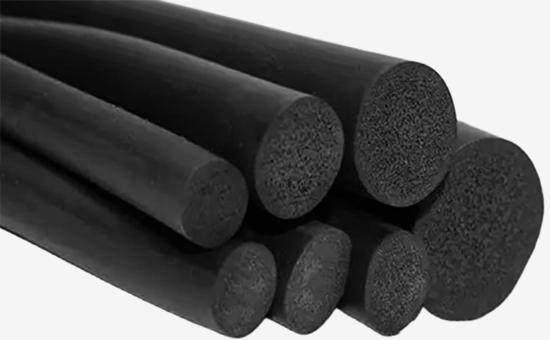
(3) Design of reinforcement filling system for reclaimed nitrile rubber foam sealing strips
Nitrile reclaimed rubber foam sealing strips are often reinforced with carbon black, effectively improving the physical and mechanical strength of the compound; Light calcium and clay serve as fillers to improve the processing performance of rubber compounds and reduce costs.
(4) Design of a softening plasticizing system for nitrile reclaimed rubber foam sealing strips
Common additives used in the plasticizing system for softened plasticizers of nitrile reclaimed rubber foam sealing strips include di-butyl phthalate (DBP), liquid nitrile rubber, mineral oil, etc., to improve the processing performance and low-temperature elasticity of the compound. Use 5-15 parts per dosage, avoiding the use of non-polar softeners such as paraffin oil.
3. Reference formula for vulcanizing foamed sealing strips in the production of nitrile reclaimed rubber
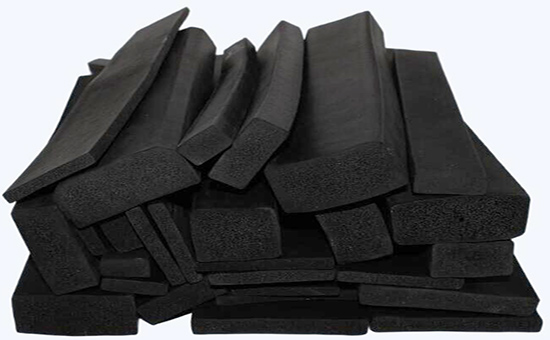
(1) Closed-cell foam sealing strip formulation produced using nitrile rubber/nitrile reclaimed rubber together
Nitrile rubber 60 parts, nitrile reclaimed rubber 40 parts, zinc oxide 5 parts, stearic acid 1.8 parts, antioxidant RD 1 part, carbon black N550 35 parts, dibutyl phthalate 20 parts, accelerator CZ 0.8 parts, accelerator D 0.4 parts, sulfur 1.5 parts, foaming agent AC 5 parts, foaming agent OBSH 5 parts; A total of 175.5 units.
(2) Formulation for the perforated foam sealing strip produced by all-nitrile reclaimed rubber
Nitrile reclaimed rubber 100 parts, zinc oxide 5 parts, stearic acid 1.8 parts, carbon black N550 35 parts, dibutyl phthalate 11 parts, liquid nitrile rubber 13 parts, accelerator DM 1.2 parts, accelerator TMTM 0.2 parts, sulfur 2.5 parts, foaming agent H 8 parts, foaming agent TSH 4 parts; A total of 181.7 units.
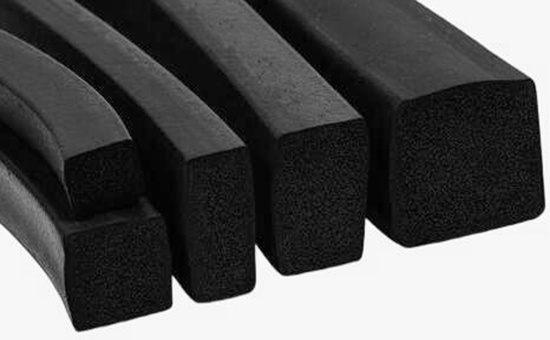
When using nitrile reclaimed rubber to replace a certain proportion of nitrile rubber in producing sponge foamed sealing strips, rubber product manufacturers must reasonably select nitrile reclaimed rubber based on specific needs, design foaming systems, vulcanization systems, reinforcement and filling systems, and softening plasticizing systems appropriately, strictly control production process parameters, and significantly enhance the economic efficiency and market competitiveness of sealing strips while ensuring oil resistance, elasticity, and sealing performance.
Exclusive original article [commercial authorization] reprint, excerpt and excerpt in any form are prohibited without written authorization. Focus on Hongyun rubber: learn the process formula and raw material technology of producing rubber products from recycled rubber to help you reduce costs and increase profits