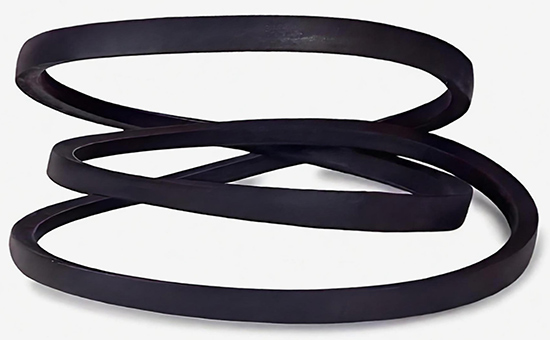
The V-belt of a washing machine is subjected to long-term bending, friction, stretching, and compression, which puts requirements on the rubber's fatigue resistance, wear resistance, flexibility, and dimensional stability. Generally, it is processed mainly using natural rubber. Properly adding reclaimed rubber can not only reduce raw material costs but also improve the rubber processing technology and enhance the finished product's aging resistance. In actual production, different layers of a washing machine V-belt have different performance requirements, so the proportion of reclaimed rubber used varies.
1. Using natural rubber/chloroprene rubber/reclaimed rubber together to produce the V-belt tension layer rubber
The tension layer of a washing machine V-belt needs to withstand tensile stress during bending and protect the strength layer. The rubber must have good elasticity, flex fatigue resistance, and heat aging resistance. General-purpose products can be made with natural rubber, natural rubber/styrene-butadiene rubber, or natural rubber/chloroprene rubber combinations. Adding 20%-40% reclaimed rubber can both reduce raw material costs and ensure the V-belt's stability and durability.
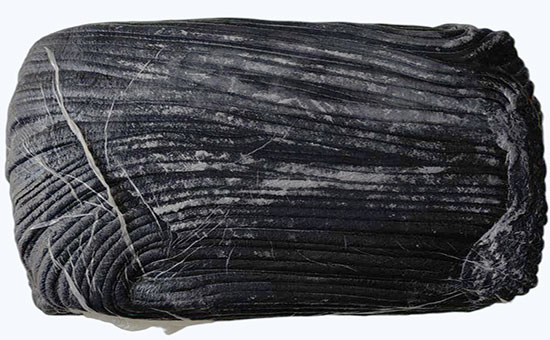
Natural rubber 55 parts, chloroprene rubber 25 parts, reclaimed rubber 20 parts, zinc oxide 5 parts, magnesium oxide 2.5 parts, stearic acid 2.5 parts, anti-aging agent 2 parts, reinforcing filler 40 parts, softener 5 parts, accelerator 1 part, sulfur 1.5 parts; total 159.5 parts.
2. Using natural rubber/chloroprene rubber/reclaimed rubber together to produce the V-belt compression layer rubber
The compression layer of a washing machine V-belt is mainly used to transmit torque and needs to withstand cyclic compression/bending. The rubber must have good wear resistance, low compression set, fatigue resistance, and heat resistance. It can be produced using a combination of natural rubber/styrene-butadiene rubber or natural rubber/chloroprene rubber; adding 20%-40% reclaimed rubber can effectively reduce raw material costs.
Natural rubber 30 parts, chloroprene rubber 50 parts, reclaimed rubber 20 parts, zinc oxide 5 parts, magnesium oxide 2.5 parts, stearic acid 2.5 parts, anti-aging agent 2 parts, reinforcing filler 86 parts, softener 2.5 parts, accelerator 0.65 parts, sulfur 0.65 parts; total 201.8 parts.
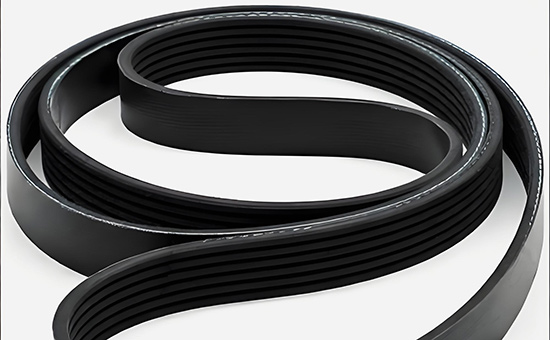
3. Using natural rubber/styrene-butadiene rubber/reclaimed rubber together to produce the V-belt fabric covering rubber
The fabric covering layer of a washing machine V-belt protects the internal structure and reduces wear. The rubber requires aging resistance, weather resistance, and good adhesion to the fabric. It can be made from natural rubber or natural rubber/styrene-butadiene rubber combinations. Since the fabric layer requires relatively low strength, the proportion of reclaimed rubber can be increased to 25%-50% to further reduce raw material costs.
Natural rubber 50 parts, styrene-butadiene rubber 20 parts, reclaimed rubber 30 parts, zinc oxide 7 parts, stearic acid 2 parts, anti-aging agent 1.5 parts, reinforcing filler 15 parts, conductive agent 18 parts, softener 1.5 parts, accelerator 0.95 parts, sulfur 0.85 parts; total 146.8 parts.
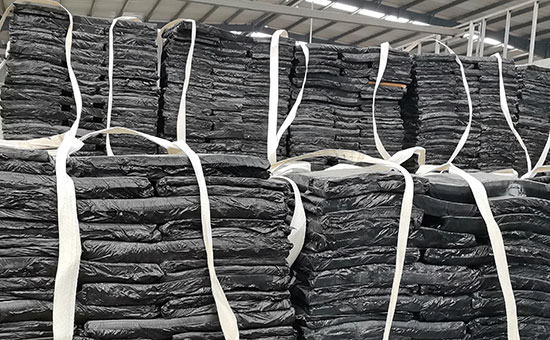
Using only natural rubber for all layers of a washing machine V-belt is quite costly. Properly adding reclaimed rubber can effectively reduce raw material costs. When selecting reclaimed rubber for V-belts, it is recommended to choose types with fewer impurities, high strength, good elasticity, and stable quality. If there are significant performance fluctuations among batches of reclaimed rubber, it can easily cause changes in rubber Mooney viscosity, further affecting calendering, coating, molding, and the dimensional stability of the vulcanized product.
Exclusive original article [commercial authorization] reprint, excerpt and excerpt in any form are prohibited without written authorization. Focus on Hongyun rubber: learn the process formula and raw material technology of producing rubber products from recycled rubber to help you reduce costs and increase profits