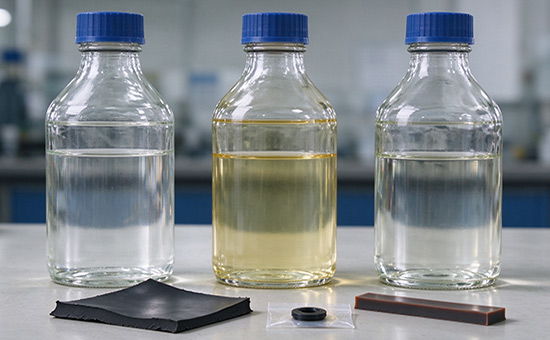
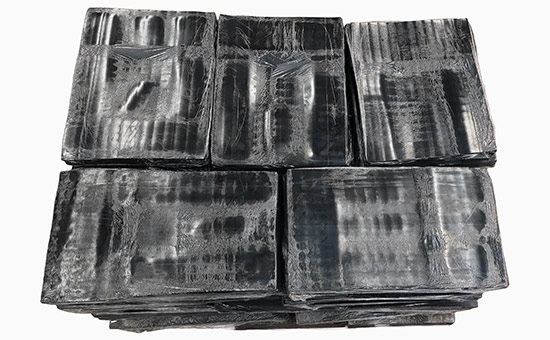
EPDM reclaimed rubber is made from EPDM machine head rubber, unvulcanized compound rubber, or waste EPDM rubber products. It has good high and low temperature resistance, weather resistance, ozone resistance, and processing adaptability. It is widely used in the production of rubber products such as sealing strips, rubber gaskets, and waterproof materials. Replacing EPDM virgin rubber with reclaimed EPDM can effectively reduce production costs. In actual production, plasticizers affect the softness, flow, mixing and vulcanization performance of EPDM reclaimed rubber compounds, as well as the heat resistance of the products.
1. How to correctly choose plasticizers for different types of EPDM reclaimed rubber products
Common plasticizers for EPDM reclaimed rubber products include paraffin oil, naphthenic oil, and polyalkylbenzene oil.When choosing, factors such as the polarity and volatility of the oil, compatibility with the rubber compound, and the operating temperature of the final product need to be considered.If EPDM reclaimed rubber products use paraffin or naphthenic oils, the amount of peroxide needs to be appropriately increased to achieve the same crosslink density as when using polyalkylbenzene oil.
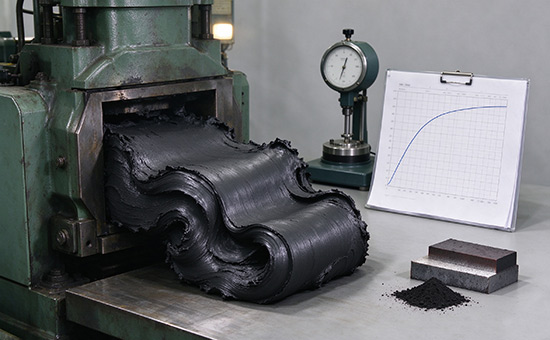
(1) When using EPDM reclaimed rubber to produce general sealing parts, gaskets, and similar products, paraffin oil or naphthenic oil can be reasonably selected based on the hardness of the rubber compound, processing flow, and cost requirements. It is better to choose plasticizers with low polarity and minimal volatile components to reduce performance changes caused by volatility or migration during long-term use.
(2) When producing rubber products with EPDM reclaimed rubber that need to operate at relatively high temperatures for a long time, attention should be paid to indicators such as low volatility and a high flash point of the plasticizer. It is recommended to preferentially choose suitable low-volatility paraffin oils. Note that a high flash point does not necessarily mean low volatility. The choice of plasticizer should be based on both oil properties and thermal aging test results of the rubber compound, not just a single indicator.
2. Considerations for choosing plasticizers for peroxide-vulcanized EPDM reclaimed rubber products
In formulas for peroxide-vulcanized EPDM reclaimed rubber products, the choice of softening plasticizers is more sensitive. Compared to paraffin and naphthenic oils, polyalkylbenzene oils have the impact on peroxide, allowing for higher crosslink density (faster vulcanization).
3. Effect of reinforcing filler surface properties on plasticizer performance in EPDM reclaimed rubber products
Common reinforcing and filler materials for EPDM reclaimed rubber products include carbon black, silica, and calcium carbonate. The surface properties of these fillers affect the distribution of plasticizers and the effectiveness of the vulcanization system. Some fillers with high specific surface area may adsorb additives in the formula, causing changes in vulcanization speed or crosslinking. This should be judged based on filler surface characteristics, formula composition, and vulcanization performance.
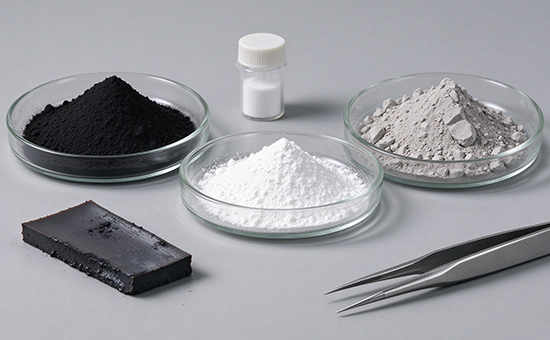
Acidic fillers (such as silica and channel black) may react with peroxide; therefore, a small amount of metal oxide (e.g., zinc oxide, magnesium oxide) or aromatic amines should be used to neutralize the rubber compound.
4. Choosing plasticizers based on the EPDM reclaimed rubber production process
When designing a softening and plasticizing system for EPDM reclaimed rubber, the focus should not only be on whether the compound mixes smoothly or extrudes easily. Adding too much plasticizer may reduce the hardness, strength, and heat resistance of the EPDM reclaimed rubber; too little may increase the mixing load and affect filler dispersion and molding. It is recommended to adjust the type and dosage of plasticizer in groups, while recording Mooney viscosity, cure curves, hardness, tensile properties, and changes after thermal aging to reasonably determine the type and amount of plasticizer.
When substituting part of the EPDM virgin rubber with EPDM reclaimed rubber to produce rubber products with high requirements for weather resistance and high and low temperature performance, the choice of plasticizer type and dosage should be based on the product’s operating environment and performance needs. The formulation should be designed according to the softness, flow, cure rate, and heat resistance of the rubber. Only when the plasticizer, filler/reinforcing system, and vulcanization process are properly matched with the EPDM reclaimed rubber can the reclaimed rubber effectively reduce costs and improve processing performance.
Exclusive original article [commercial authorization] reprint, excerpt and excerpt in any form are prohibited without written authorization. Focus on Hongyun rubber: learn the process formula and raw material technology of producing rubber products from recycled rubber to help you reduce costs and increase profits