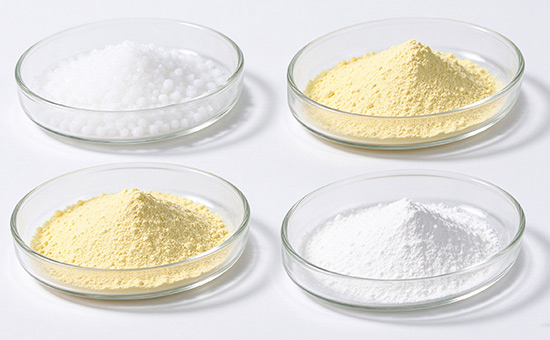
When using reclaimed rubber to produce rubber products, the choice of vulcanization accelerator directly affects the vulcanization efficiency, finished product performance, and processing costs of the compound material. In actual production, there are three main categories of accelerators commonly used for reclaimed rubber products: thiazole compounds, sulfonamide compounds, and sulfur lam types; Although similar performance among accelerators in the same series exists in practical applications, manufacturers of reclaimed rubber products need to select the appropriate type of accelerator based on actual needs.
1. Comparison of the stability of thiazole accelerator M and DM
Both accelerator M and accelerator DM belong to thiazole accelerators, formed by the condensation of two M molecules. M is a pale yellow powder, slightly odorous and bitter; DM is lighter in color and has a lighter bitterness. Accelerator DM has a higher vulcanization temperature and slower speed, but it has good vulcanization flatness, strong scorch resistance, and certain aftereffects. Reclaimed rubber vulcanized adhesive has higher tensile stress and a wider and safer operating window. Accelerator M has a fast vulcanization reaction, short charring time, and poor flatness, so scorch risk must be considered.
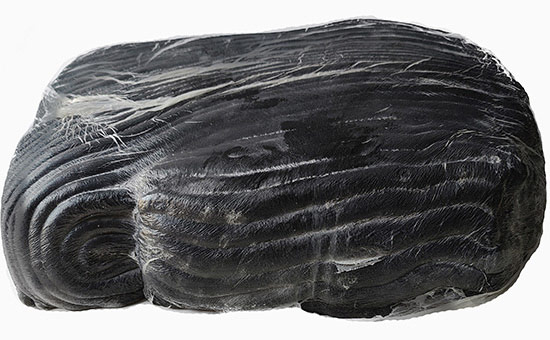
When producing rubber products with reclaimed rubber, accelerators M and DM can be partially substituted in the formulation, but after replacement, the scorching time and positive vulcanization point E6LYY77 must be re-verified. Both have plasticizing effects in natural rubber and natural rubber/latex reclaimed rubber combined with others; M plasticizing is better at low temperatures, and DM is more effective at higher temperatures; Reclaimed rubber vulcanized with accelerator M has slightly lower tensile strength, fixed tensile stress, tear resistance, and elasticity than DM compounds, but better heat aging resistance.
2. Selection techniques for hyposulfonamide accelerators CZ, NOBS, and NS
Accelerators CZ, NOBS, and NS are post-acting hyposulfonamide accelerators and are the main agents for preventing scorch in thick reclaimed rubber products.
(1) The accelerator CZ is an off-white or beige powder, highly active, moderately effective in aftereffects, stable storage, balancing scorch resistance and vulcanization speed, mild discoloration, less prone to frosting, and excellent aging resistance of vulcanized adhesive.
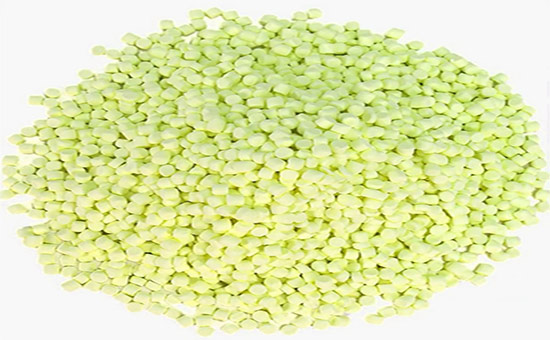
(2) The delayed effect of accelerator NOBS is more pronounced than that of CZ, especially suitable for natural and synthetic rubber systems containing alkaline furnace black, and can simultaneously improve physical properties and anti-aging performance. It should be noted that NOBS does not meet current environmental protection requirements.
(3) The accelerator NS vulcanization rate is comparable to CZ, with stronger delayed effect. Its aftereffects are more pronounced in natural rubber and combined natural rubber/latex reclaimed rubber, but discoloration and minor contamination should be observed. Use light-colored latex reclaimed rubber products with caution.
3. Differences in usage among Tum accelerators T, TS, TRA
(1) Accelerator TMTD(TT) is a white or grayish-white powder, a typical super-accelerator. When heated above 100°C, it slowly separates free sulfur, so it can also be used as a vulcanizing agent. Accelerator TT is a second accelerator among thiazole and is suitable for producing continuously vulcanized reclaimed rubber products.
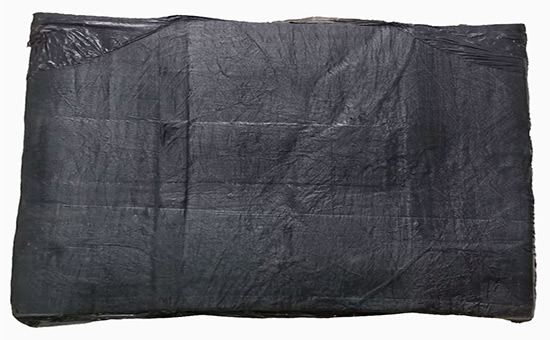
(2) The accelerator TMTM(TS) is a pale yellow or yellow powder, a typical super-accelerator, does not discolor, does not cause contamination, and is safer than TT for burning, but less active than TT.
(3) Accelerator: DPTT(TRA) is a pale yellow odorless powder that can be used in latex reclaimed rubber, tire reclaimed rubber, nitrile reclaimed rubber products, and can also be used directly as a vulcanizing agent.
When producing rubber products with reclaimed rubber, replacing accelerators within the same system is not simply a simple equal quantity exchange: it is necessary to comprehensively consider the scorching time, vulcanization flatness, environmental properties, and color requirements of the reclaimed rubber products, select the appropriate type of accelerator, and reasonably determine the amount of accelerator used.
Exclusive original article [commercial authorization] reprint, excerpt and excerpt in any form are prohibited without written authorization. Focus on Hongyun rubber: learn the process formula and raw material technology of producing rubber products from recycled rubber to help you reduce costs and increase profits