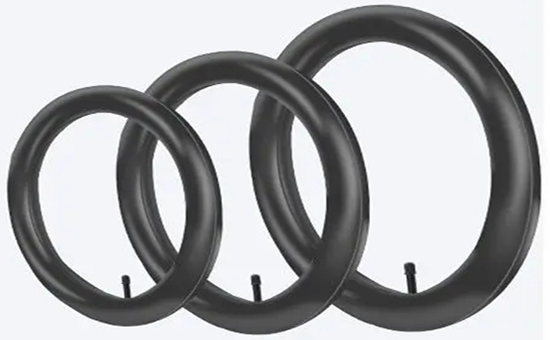
Rubber inner tubes have high requirements for the air tightness, elasticity, flex fatigue resistance, and dimensional stability of the rubber compounds. Using only natural rubber or butyl rubber would be too costly. Latex reclaimed rubber is made from waste natural rubber, waste latex, and their products. It has the advantages of high strength, good elasticity, low specific gravity, and low cost. Can it be used in the production of rubber inner tubes? What issues should be noted when using latex reclaimed rubber to reduce costs?
1. Is latex reclaimed rubber suitable for producing rubber inner tubes?
Latex reclaimed rubber retains the basic properties of natural rubber, has good compatibility with natural rubber, and can replace part of the natural rubber in inner tube production. It can also improve compound mixing and processing flow. However, it has already undergone one vulcanization and reclamation process, so its molecular structure is different from that of fresh natural rubber. Therefore, it cannot completely replace natural rubber. In practice, latex reclaimed rubber can be reasonably used in low-load rubber inner tubes, bicycle inner tubes, and other cost-sensitive products. This helps reduce costs while improving mixing, extrusion, and joint processes.
2. How to ensure air tightness when using latex reclaimed rubber in rubber inner tubes?
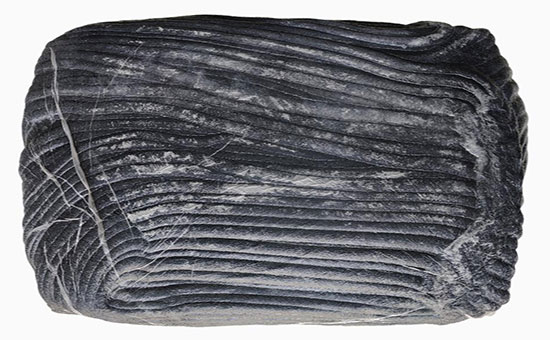
Rubber inner tubes need to maintain internal air pressure for a long time, so the compound must have excellent air tightness. When choosing latex reclaimed rubber, it is important to select ultra-fine filtered latex reclaimed rubber with high fineness and no impurities. Impurities, voids, volatiles, and poor dispersion in the compound can all cause potential defects in the inner tube.
3. Application approach of latex reclaimed rubber in rubber inner tubes
When using latex reclaimed rubber, the key is not "the more you add, the more you save," but to find a balance among cost and performance. In natural rubber-based inner tube production, the amount of latex reclaimed rubber can be adjusted based on the tube thickness, pressure resistance, usage environment, and vulcanization method. Hardness, tensile strength, elongation at break, compression set, and air tightness tests should guide whether to increase the amount.
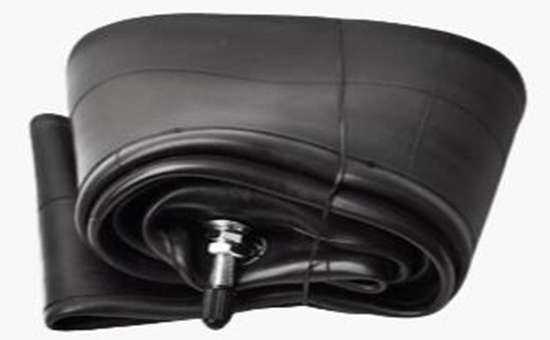
For thin-walled inner tubes and inner tubes that require high dynamic flex fatigue resistance, the proportion of latex reclaimed rubber should be controlled properly to avoid reduced effective rubber content, which could lower strength, elongation, or fatigue resistance. When adding latex reclaimed rubber, fillers like carbon black, silica, zinc oxide, stearic acid, sulfur, and accelerators must match the vulcanization state of the reclaimed rubber. If the reclaimed rubber is already highly vulcanized, using the original formula might change vulcanization speed and crosslink density, so the optimal curing time should be confirmed using the vulcanization curve.
4. Key points for mixing/calendering rubber inner tubes with latex reclaimed rubber
(1) Mixing: When adding latex reclaimed rubber, avoid long-time high-temperature and high-shear mixing in the internal mixer. Too high temperatures can increase the risk of premature curing and the compound’s plasticity. Adjust the steps including masticating natural rubber, adding latex reclaimed rubber, fillers, and softeners according to equipment characteristics, and pay attention to discharge temperature and compound uniformity.
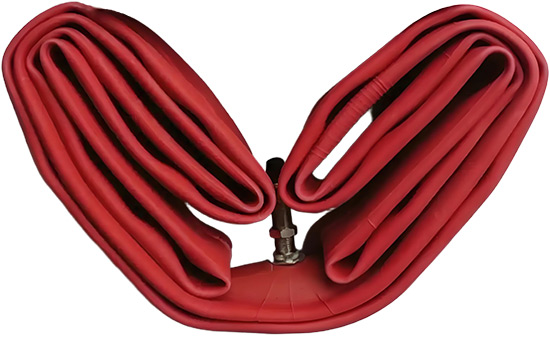
(2) Calendering: Focus on sheet thickness, surface smoothness, and dimensional stability. When using latex reclaimed rubber with natural rubber, sheets that are too thick increase final product weight, while too thin sheets may affect pressure resistance and flex fatigue performance. Large batch-to-batch variations in reclaimed rubber can also lead to fluctuations in compound viscosity and calendering behavior, so production consistency is critical.
When using latex reclaimed rubber to reduce the cost of rubber inner tubes, it is important to select the right grade, determine the appropriate blending ratio, and adjust the formula, mixing, and vulcanization processes properly to truly achieve cost reduction and efficiency improvement.
Exclusive original article [commercial authorization] reprint, excerpt and excerpt in any form are prohibited without written authorization. Focus on Hongyun rubber: learn the process formula and raw material technology of producing rubber products from recycled rubber to help you reduce costs and increase profits