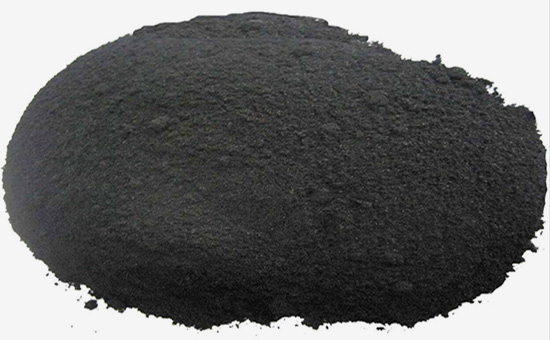
Vulcanized rubber powder is made of crushing of waste rubber products (room temperature crushing method, freezing method or room temperature chemical method, etc.), which has the elasticity of rubber, which can replace part of the raw rubber to produce rubber outsoles, reduce the cost of raw materials and improve the performance of rubber processing technology. Which rubber soles can be mixed with vulcanized rubber powder in the production? What role can vulcanized rubber powder play in different types of rubber soles? How much is appropriate?
1. Application of vulcanized rubber powder in the outsole of ordinary sports shoes
The molded outsole of ordinary sports shoes is generally processed from natural rubber, styrene-butadiene rubber or butadiene rubber as raw materials, and an appropriate amount of vulcanized rubber powder can effectively reduce the cost of raw materials. Generally, in the outsole formula of sports shoes with more natural rubber content E5LYY718 20-40 parts of vulcanized rubber powder (about 30-50 mesh) can be mixed; It is recommended to control the amount of rubber powder in the outsole of sports shoes with a large amount of synthetic rubber to less than 15 parts to ensure good physical and mechanical properties of the sole.
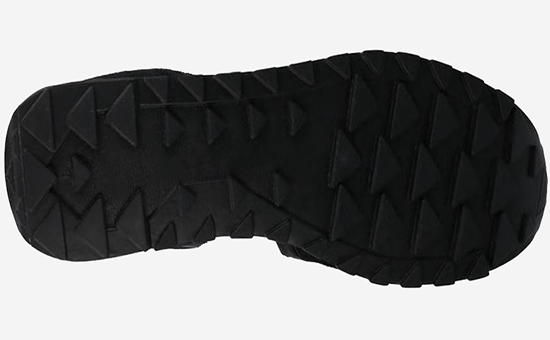
2. Application of vulcanized rubber powder in the outsole of basketball sneakers
The main raw materials of basketball sports shoe outsoles are natural rubber and synthetic rubber, which have higher requirements for wear resistance, anti-slip, elasticity and tear resistance; Vulcanized rubber powder has a certain reinforcement properties, which can replace some reinforcing agents (such as carbon black and silica) and reduce the cost of raw materials. In actual production, the fineness of the rubber powder directly affects the physical and mechanical properties and appearance of the outsole, it is recommended to choose 40-80 mesh vulcanized rubber powder, and the dosage is controlled among 15-20 parts.
3. Application of vulcanized rubber powder in the outsole of anti-slip boots
As a key component that directly touches the ground and bears friction, compression and bending, the outsole of industrial anti-slip boots needs to have high wear resistance, good elasticity, appropriate hardness and dimensional stability, and is generally processed from natural rubber and styrene-butadiene rubber as raw materials, and the two can balance wear resistance, elasticity and cost. Due to the thick heel, the semi-finished product shrinks greatly during storage, and the appropriate amount of vulcanized rubber powder can control the shrinkage of the semi-finished product.
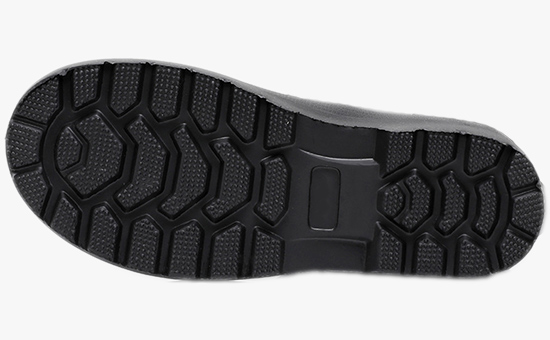
65 parts of natural rubber, 35 parts of styrene-butadiene rubber, 30 parts of vulcanized rubber powder, 5 parts of zinc oxide, 2 parts of stearic acid, 1 part of anti-aging agent BLE, 60 parts of carbon black N330, 25 parts of terracotta, 12 parts of RX-80 resin, 20 parts of coumaron resin, 1.1 part of accelerator CZ, 0.3 parts of accelerator M, 0.1 part of accelerator D, 2.5 parts of sulfur; A total of 259 copies.
60 Mesh Tire Rubber Powder is processed from 900 waste tires, which has the characteristics of high fineness, small specific gravity, good fluidity, and no impurities, and can be used in the production of various black rubber outsoles, effectively reducing the cost of raw materials under the premise of ensuring the performance of rubber outsoles.
Exclusive original article [commercial authorization] reprint, excerpt and excerpt in any form are prohibited without written authorization. Focus on Hongyun rubber: learn the process formula and raw material technology of producing rubber products from recycled rubber to help you reduce costs and increase profits