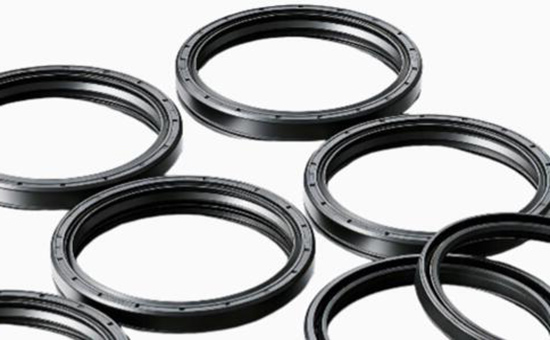
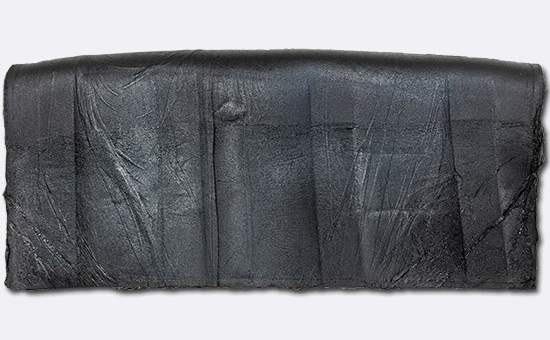
Nitrile recycled rubber retains the basic performance characteristics of nitrile rubber, has good compatibility with nitrile rubber, and can be used in any proportion with nitrile rubber to prepare rigid glue and reduce the cost of raw materials. When using nitrile rubber/nitrile recycled rubber to produce hard rubber products, the rubber product formula should be reasonably designed, and the synergy of the recycled rubber mixing ratio, vulcanization system, reinforcement filling system, softening plasticization system and other functional additives can be considered to achieve the optimal balance among performance and cost.
1. Nitrile rubber/nitrile recycled rubber is used to produce hard rubber products vulcanization system design
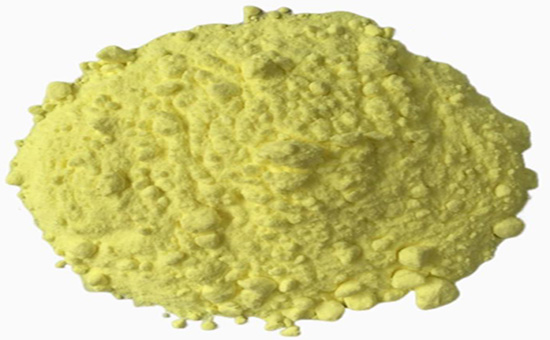
When using nitrile rubber/nitrile recycled rubber and glue as raw materials to prepare rigid glue, the amount of sulfur is generally controlled at 35-40 parts. too high sulfur will cause the softening temperature to rise, and it is easy to burn; The use of precipitated sulfur and colloidal sulfur is easier to disperse than that of ordinary sulfur powder, and the vulcanization speed is slightly faster. The use of organic accelerators, especially aldehyde amine and thiourea accelerators combined with sulfur, can effectively improve the vulcanization rate, and when the sulfur is 35 parts, it is appropriate to use 2 parts of the accelerator.
2. Nitrile rubber/nitrile recycled rubber is used to produce hard rubber products filling system design
Nitrile rubber/nitrile recycled rubber is used in combination with iron oxide to make the rubber soft and easy to process during compounding, and at the same time give viscosity, increase the fluidity during molding, and improve the physical properties of the finished cemented rubber E5LYY1016 such as tensile strength, impact strength, and softening temperature. Nitrile recycled adhesive rigid glue is filled with calcium carbonate, which is easy to process, and can increase the softening temperature, increase the impact strength, and reduce the cost. using terracotta clay filling, cementum has good acid resistance; Semi-reinforced furnace black and hot cracking carbon black can increase the softening temperature, but the effect is not very significant, and the trough carbon black can delay vulcanization, making processing difficult.
3. Nitrile rubber/nitrile recycled rubber is used to produce hard rubber products softening system design
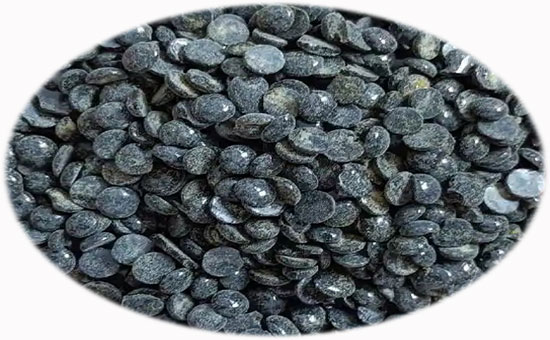
The addition of softener can improve the processing performance of nitrile rubber/nitrile recycled rubber and use rubber mixing, extrusion, molding and other processes to increase viscosity, the most commonly used is dibutyl hydroxytoluene/BHT, which can improve tensile strength, impact strength, viscosity, etc., and the softening temperature is slightly reduced; Dimer oil can improve tensile strength and impact strength; Coal tar and pine tar can increase the softening temperature; When ester plasticizers such as dibutyl phthalate and trixylene phosphate are used in combination with dibutylhydroxytoluene/BHT, coal tar and coumaron resin, the compound can be easily processed.
The minimum amount of softener in the formula of nitrile rubber/nitrile recycled rubber is generally 12-15 parts, and volatile softeners that are prone to pores should not be used.
The hard rubber products produced by nitrile rubber and nitrile recycled rubber combined with rubber have high softening temperature and good resistance to oil, solvent and chemicals, and are widely used in chemical pipelines and connecting parts, fuel tank liners, machinery industry, automobiles, aircraft related accessories, and can also be used to manufacture rubber rollers for typewriters or mimeographers and sporting goods.
Exclusive original article [commercial authorization] reprint, excerpt and excerpt in any form are prohibited without written authorization. Focus on Hongyun rubber: learn the process formula and raw material technology of producing rubber products from recycled rubber to help you reduce costs and increase profits