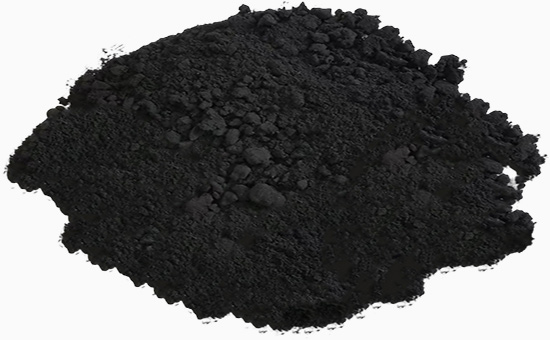
Tire rubber powder is made from waste tires and processed by mechanical processing, crushing, or grinding. It can be used together with recycled rubber to produce rubber shoe soles, reducing raw material costs. In actual production, the source, particle size, fiber content, and the ratio of tire rubber powder to reclaimed rubber, natural rubber, and synthetic rubber all affect the strength, wear resistance, hardness, and processing stability of the shoe sole. How can tire rubber powder be used to reduce costs while ensuring sole performance?
1. How to design the formulation for the outsole production using tire rubber powder and reclaimed rubber together
When producing rubber shoe soles using both tire rubber powder and reclaimed rubber, reasonable use of rubber powder can reduce raw material costs and improve the performance of rubber compound processing, thereby reducing shrinkage. It should be noted that E6LYY430, more rubber powder is not always better; After adding rubber powder to the shoe sole formula, the ratio of effective vulcanizable rubber, interfacial bonding state, and vulcanization network in the system change. Therefore, it is necessary to adjust the vulcanization and softening systems in the formulation to avoid issues such as decreased strength, decreased elongation, or deterioration in processing performance.
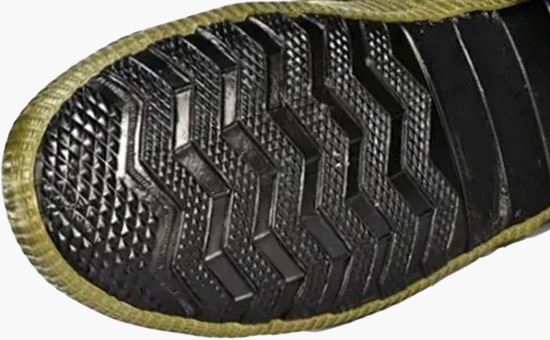
In actual production, the finer the tire rubber powder, the larger the contact area among the powder particles and natural rubber, butadiene rubber, or reclaimed rubber, making mixing and dispersing easier, and having a relatively smaller impact on the overall performance of vulcanized rubber; Considering cost considerations, rubber shoe soles mostly use tire rubber powder with 60-80 grit grit. For fabric rubber shoe outsoles with slightly higher performance requirements, tire tread rubber powder of 80 mesh or higher fineness can be used.
Different parts of the rubber shoe sole have different performance requirements, and the types and amounts of tire rubber powder vary; For midsoles, higher dosage solutions can be prioritized; Rubber shoe outsoles have higher requirements for rubber material wear resistance, tensile stretching, and flexing properties, so the proportion of tire rubber powder should be gradually increased according to product positioning.
2. The soles of rubber shoes use tire rubber powder and recycled rubber to reduce costs, making practical formulas
(1) Fabric rubber shoes use a formula of tire rubber powder and recycled tire rubber
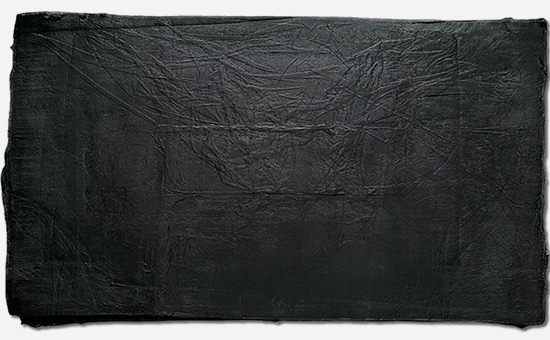
Natural rubber 15 parts, polybutadiene rubber 30 parts, tire reclaimed rubber 55 parts, tire rubber powder 35 parts, zinc oxide 3.5 parts, stearic acid 2 parts, paraffin 0.5 parts, anti-aging agent A 0.5 parts, anti-aging agent D 0.5 parts, high-wear carbon black 30 parts, heavy oil 6 parts, accelerator CZ 1 part, sulfur 1.6 parts; Total: 180.6 parts.
(2) Combining tire reclaimed rubber and tire rubber powder to produce a formulation for rubber shoe midsoles
100 parts tire reclaimed rubber, 30 parts tire rubber powder, 3 parts zinc oxide, 1.5 parts stearic acid, 1 part antioxidant D, 2 parts gum malone resin, 2 parts engine oil, 1 part rosin, 0.7 parts accelerator M, 0.4 parts accelerator D, DM 0.55 parts, sulfur 1.45 parts; Total: 143.6 parts.
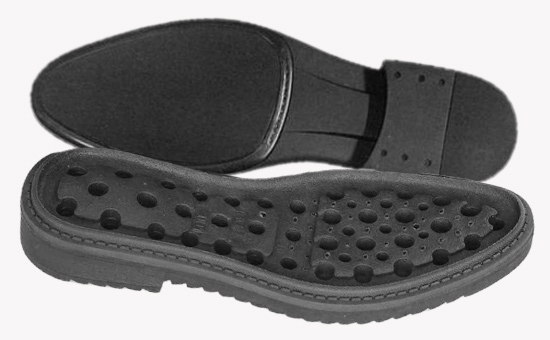
Tire rubber powder cannot be used solely as a regular filler in rubber shoe soles; its function is not exactly the same as inert fillers such as clay or calcium carbonate. When using tire rubber powder and tire reclaimed rubber together to produce different parts of the shoe shoe sole, special attention must be paid to particle size, fiber residue, impurity content, and batch stability. When the quality of the rubber powder fluctuates greatly, even if the same formula is used, Mooney viscosity, mixing time, extrusion state, and post-vulcanization properties may change significantly. Reasonable combination of tire rubber powder and tread reclaimed rubber to produce rubber shoe soles can balance cost, processing performance, and finished product performance.
Exclusive original article [commercial authorization] reprint, excerpt and excerpt in any form are prohibited without written authorization. Focus on Hongyun rubber: learn the process formula and raw material technology of producing rubber products from recycled rubber to help you reduce costs and increase profits