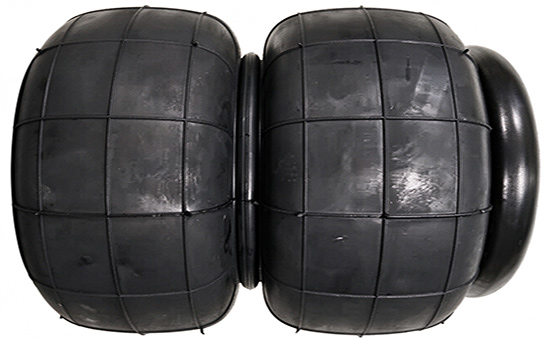
Rubber air springs are elastic components commonly used in automotive suspension, rail transit, industrial equipment vibration damping, and other fields. During operation, they are subjected to repeated compression, expansion, and bending over a long period. Canvas rubber is an important part of the air spring’s skeleton layer, mainly responsible for bonding the fabric, transferring loads, and buffering stress during dynamic deformation. It has high requirements for adhesive strength, flex fatigue resistance, and aging resistance, and is mostly processed from natural rubber. Adding a suitable amount of reclaimed rubber can improve processing performance and reduce production costs.
1. Controlling the proportion of reclaimed rubber in rubber air spring canvas rubber
Canvas rubber is used in the load-bearing skeleton layer of rubber air springs, and its performance directly affects the lifespan of the air spring. When adding reclaimed rubber, it is recommended to conduct gradient tests within a 5%-30% range. The appropriate amount of reclaimed rubber should be determined through fabric bonding strength and flex fatigue tests, especially for products with high bonding strength and dynamic fatigue requirements. Too high a proportion of reclaimed rubber can affect the tensile strength, fabric adhesion, and dynamic flex fatigue performance of the air spring canvas rubber.
2. Tips for choosing reclaimed rubber for rubber air spring canvas rubber
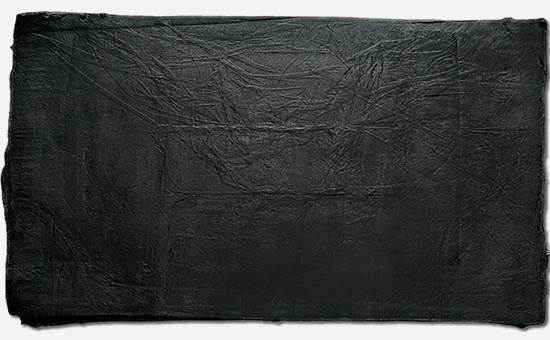
When choosing reclaimed rubber for air spring canvas rubber, compatibility with the main rubber must be considered first, as it directly affects mixing uniformity and vulcanized rubber performance. It is recommended to prioritize stable-quality tire tread reclaimed rubber, focusing on fineness (60-80 mesh), tensile strength, ash content, impurity levels, and Mooney viscosity stability. Excessive ash and impurities in reclaimed rubber can affect the bonding interface among the rubber and fabric.
3. Formula adjustment tips for reclaimed rubber in rubber air spring canvas rubber
When designing rubber air spring canvas rubber formulas containing reclaimed rubber, reinforcement effect and adhesion quality must be considered comprehensively.
When adding reclaimed rubber, a sulfur-accelerator vulcanization system can be used. Pay attention to the reclaimed rubber's adsorption of accelerators and its own vulcanization characteristics. Use the vulcanization curve to determine the amounts of vulcanizing agent, accelerator, and curing time, avoiding under- or over-curing. Reinforce with N330, N550, or N774 carbon black, and use a small amount of white carbon black if necessary. Since reclaimed rubber contains softening components, adjust the softener amount appropriately to prevent the rubber from having too low Mooney viscosity, which can affect calendering and fabric coating quality. When using an orthoquinone adhesive system, control the ratios of resorcinol, methylene donors, and white carbon black properly.
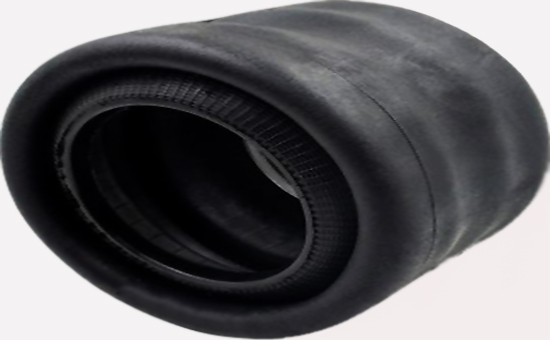
4. Reference formulation for rubber air spring canvas rubber with reclaimed rubber
Natural rubber: 70 parts, reclaimed rubber: 30 parts, zinc oxide: 15 parts, stearic acid: 1.5 parts, antioxidant A: 0.5 parts, antioxidant D: 0.5 parts, carbon black N774: 15 parts, light calcium: 15 parts, clay: 15 parts, pine tar: 2 parts, accelerator DM: 0.2 parts, accelerator M: 0.45 parts, sulfur: 1.85 parts; total 167 parts.
Rubber air springs require high uniformity in rubber materials. When using reclaimed rubber to reduce costs, it is recommended to pre-plastify and filter it before mixing. During calendering, strictly control Mooney viscosity, roll temperature, and calendering speed to ensure uniform coating thickness and a smooth rubber sheet surface. Proper use of reclaimed rubber in air spring canvas rubber can effectively lower material costs while ensuring skeleton layer bonding strength and dynamic fatigue performance.
Exclusive original article [commercial authorization] reprint, excerpt and excerpt in any form are prohibited without written authorization. Focus on Hongyun rubber: learn the process formula and raw material technology of producing rubber products from recycled rubber to help you reduce costs and increase profits