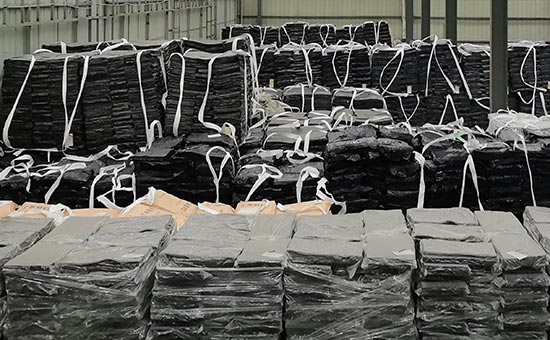
The degree of vulcanization of recycled rubber is the degree to which recycled rubber macromolecules form a cross-linked structure during the vulcanization process, and the density of the connection among rubber molecular chains through sulfur bonds (such as single sulfur bonds, polysulfide bonds, etc.) is the key index to measure the degree of rubber vulcanization reaction, which is mainly divided into three stages, undersulfur - insufficient vulcanization, positive vulcanization - suitable vulcanization, and persulfur - excessive vulcanization; The degree of vulcanization of recycled rubber is different, and the mechanical strength of vulcanized rubber such as tensile strength, constant tensile stress, tear elongation, and tear strength is different.
1. The relationship among the tensile strength of recycled rubber vulcanized rubber and the degree of vulcanization
The tensile strength of recycled rubber is used to characterize the ultimate ability of the rubber to resist tensile failure, which refers to the load on the unit section of the specimen when it is stretched to fracture.
(1) In the hyposulfur stage, the cross-linking density is insufficient, the intermolecular chain force is weak, and it is easy to slip when subjected to external forces, and the tensile strength of recycled rubber is low; (2) With the advancement of vulcanization degree to positive vulcanization, the number of cross-linking points increases and E5LYY1125 is evenly distributed, and the molecular chain forms a three-dimensional network structure, which can effectively transmit and disperse stress, and the tensile strength gradually increases to the peak. (3) In the persulfurization stage, the continuous crosslinking reaction will trigger the degradation of the molecular chain, and the crosslinking network will be partially fractured, and the tensile strength of the recycled rubber vulcanized rubber will decrease.
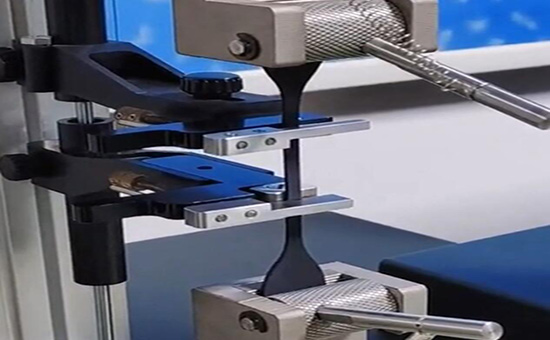
2. The relationship among the fixed tensile stress of recycled rubber vulcanization rubber and the degree of vulcanization
The constant tensile stress of recycled rubber is an important index used to characterize the rigidity of the compound, which refers to the load on the unit area of the specimen when it is stretched to a certain length.
(1) In the hyposulfur stage, the cross-linking points are sparse, the molecular chain is highly flexible, and it is easy to produce large deformation under external forces, and the fixed tensile stress of recycled rubber vulcanized rubber is low. (2) During positive vulcanization, with the deepening of vulcanization, the cross-linking density increases linearly, the molecular chain motion is limited, and the stress required to achieve the same deformation increases significantly, and the constant tensile stress of recycled rubber vulcanized rubber continues to increase. (3) In the persulfurization stage, the crosslinking density of recycled rubber vulcanized rubber may decrease slightly due to degradation, but the overall level is still maintained at a high level, and the constant tensile stress decreases gradually.
3. The relationship among the elongation and the degree of vulcanization of recycled rubber vulcanized rubber
The elongation of recycled rubber tear off is an important index to characterize the elastic deformation ability of the rubber material, which refers to the ratio of the elongation part to the original length when the sample is broken, expressed as a percentage (%).
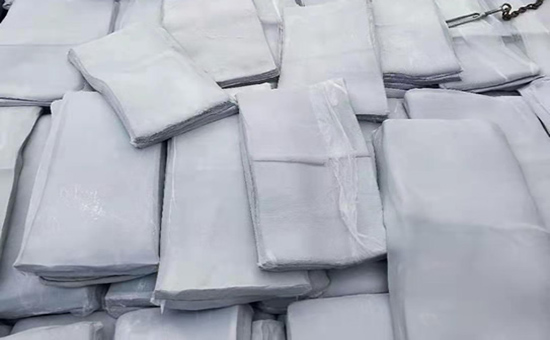
(1) In the hyposulfur stage, the cross-linking network is imperfect, the molecular chain has a large space for extension, and the elongation of recycled rubber vulcanized rubber is high. (2) With the development of vulcanization degree to positive vulcanization, the increase of crosslinking points restricts the free extension of the molecular chain, and the elongation at break gradually decreases. (3) In the persulfurization stage, the molecular chain degradation leads to loose network structure, and the elongation at tear may rise slightly, and the overall performance of recycled rubber vulcanized rubber has deteriorated.
4. The relationship among the tear strength of recycled rubber vulcanized rubber and the degree of vulcanization
The tearing of recycled rubber is a phenomenon caused by the rapid expansion and cracking of cracks in the material when subjected to force, and is one of the important indicators to measure the resistance of recycled rubber products.
(1) In the hyposulfur stage, the crack is prone to rapid propagation along the weak link of the molecular chain due to insufficient cross-linking density, and the tear strength of recycled rubber vulcanized rubber is low. (2) During positive vulcanization, the uniform cross-linking network can effectively hinder the spread of cracks, and the tear strength of recycled rubber vulcanized rubber reaches the best state. (3) In the persulfurization stage, the molecular chain degradation leads to local damage to the cross-linking network, the crack propagation resistance is reduced, and the tear strength of the recycled rubber vulcanized rubber decreases significantly.
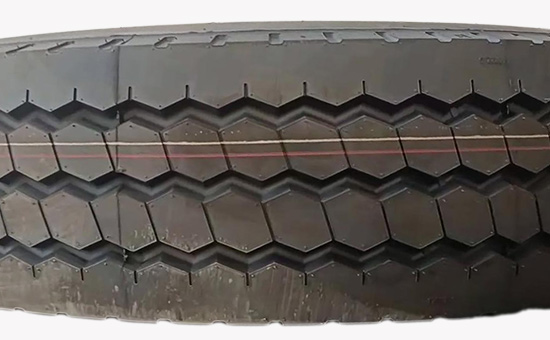
There is a clear internal relationship among the mechanical properties of recycled vulcanized rubber and the degree of vulcanization. When using recycled rubber as the main raw material to produce rubber products, the production process must be strictly controlled, and the degree of vulcanization can be controlled within an appropriate range by adjusting the vulcanization system, controlling the vulcanization time and temperature, so that the mechanical properties of the recycled rubber vulcanized rubber can reach the best equilibrium.
Exclusive original article [commercial authorization] reprint, excerpt and excerpt in any form are prohibited without written authorization. Focus on Hongyun rubber: learn the process formula and raw material technology of producing rubber products from recycled rubber to help you reduce costs and increase profits