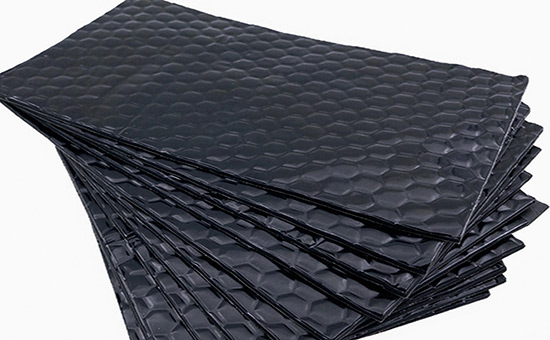
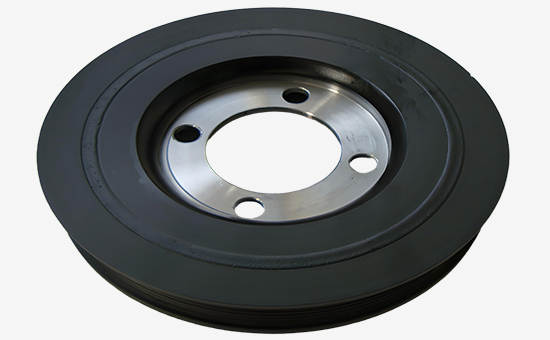
Butyl reclaimed rubber is made from butyl inner tubes as raw material, and is processed through sorting, crushing, desulfurization, filtering, refining, and other procedures. It retains the basic properties of butyl rubber, such as good airtightness, heat resistance, shock absorption, and corrosion resistance. It can be used alone or combined with butyl rubber or chlorinated butyl rubber to produce various shock-absorbing rubber products, effectively reducing raw material costs. When using butyl reclaimed rubber to make shock-absorbing rubber products, the formula design is crucial.
1. Tips for Choosing a Vulcanization System for Butyl Reclaimed Rubber Shock-Absorbing Products
When using butyl reclaimed rubber alone or in combination with butyl rubber to produce shock-absorbing rubber products, the vulcanization system directly affects the rubber's stiffness, damping coefficient, heat resistance, and fatigue resistance.
Common vulcanization systems for butyl reclaimed rubber shock-absorbing products include sulfur vulcanization systems, phenolic resin vulcanization systems, amine-based vulcanization systems, and thiourea vulcanization systems. Because accelerators themselves have steric effects, rubber compounds using accelerator DZ have the lowest rebound, the highest energy loss, and better damping performance; compounds with accelerator M have the highest rebound, the lowest energy loss, and the worst damping. DZ and CZ have relatively poor thermal stability; under long-term high-temperature heating, the rebound of compounds containing these increases.
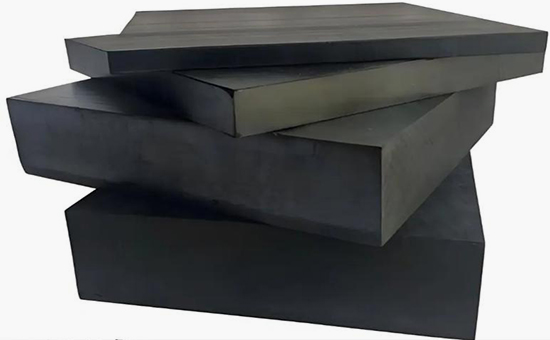
For butyl reclaimed rubber vulcanizates with roughly similar tensile and shear strength, phenolic resin vulcanization systems and thiourea systems provide higher damping coefficients and lower elongation at break. Phenolic resin systems have faster vulcanization rates, lower vulcanization temperatures, and stronger anti-reversion than thiourea systems. Adding appropriate para-nitroaniline and diphenylguanidine to phenolic resin systems further improves overall performance.
2. Tips for Choosing Reinforcing Filler Systems for Butyl Reclaimed Rubber Shock-Absorbing Products
The reinforcing filler system is a key factor affecting the dynamic damping of butyl reclaimed rubber products and is closely related to the damping coefficient and modulus of the vulcanized rubber.
When producing shock-absorbing rubber products with butyl reclaimed rubber as the main material, fast extrusion blacks and general furnace blacks are commonly used as reinforcement. As the carbon black content increases, both the damping and stiffness of the vulcanized rubber rise. For a fixed amount of carbon black, high abrasion-resistant blacks with smaller particle sizes and higher activity provide better damping and stiffness than semi-reinforcing blacks. Note that smaller carbon black particles can significantly increase fatigue effects, worsening fatigue damage, which negatively affects the fatigue resistance of butyl reclaimed rubber shock-absorbing products.
To produce high-damping shock-absorbing rubber with butyl reclaimed rubber, silane-coupled mica, vermiculite, and graphite can be used appropriately to increase internal friction, improve damping properties, and reduce creep and temperature sensitivity. White carbon black has weaker dynamic performance than carbon black, and inorganic fillers like calcium carbonate or kaolin provide weak reinforcement, requiring large amounts that can negatively affect overall rubber performance; therefore, they should be used cautiously in shock-absorbing products.
3. Tips for Choosing a Plasticizer System for Butyl Reclaimed Rubber Shock-Absorbing Products
When using butyl reclaimed rubber, or a butyl/reclaimed rubber blend, increasing the amount of plasticizer decreases the elastic modulus of the vulcanized rubber and increases the damping coefficient. Proper use of plasticizers can improve low-temperature performance and fatigue resistance of butyl reclaimed rubber vulcanizates, but also increases creep and stress relaxation, which can affect damping performance and product reliability, so the amount of plasticizer should not be too high.
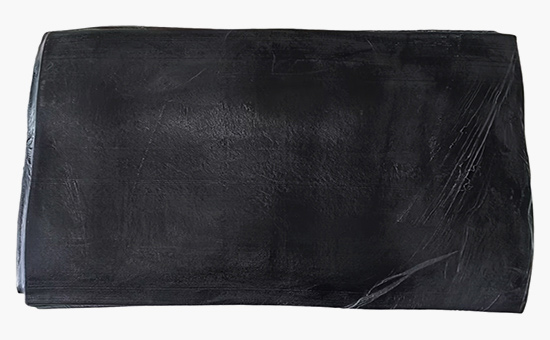
High-strength butyl reclaimed rubber is chosen from high-quality waste butyl inner tubes, and processed through far-infrared desulfurization and low-temperature rubber molecule reduction technology. After filtering and calendering, it forms slabs with strong airtightness, heat and ozone resistance, aging resistance, shock absorption, high strength, and good elasticity. The Mooney viscosity is 60±5. It can be used alone or in combination with virgin butyl, producing various shock-absorbing rubber products and reducing raw material costs by about 20%.
When producing shock-absorbing rubber products with butyl reclaimed rubber, manufacturers first need to choose butyl reclaimed rubber with appropriate specifications according to actual needs, design the rubber formulation reasonably, and adjust production parameters appropriately, in order to effectively reduce raw material costs while ensuring product performance.
Exclusive original article [commercial authorization] reprint, excerpt and excerpt in any form are prohibited without written authorization. Focus on Hongyun rubber: learn the process formula and raw material technology of producing rubber products from recycled rubber to help you reduce costs and increase profits