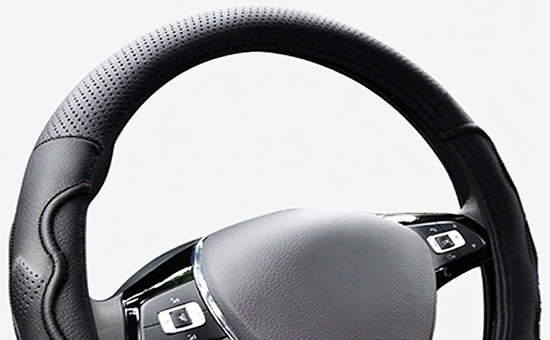
Tire reclaimed rubber is processed from waste tire rubber powder, offering low cost and good performance, and can replace high-priced natural rubber and styrene-butadiene rubber in producing various rubber products. Rubber car steering wheel handles come into prolonged contact with the driver's palm and need to have good anti-slip, wear resistance, flexibility, and aging resistance. Natural rubber and styrene-butadiene rubber are traditional common raw materials for steering wheel handles; Can tire reclaimed rubber replace expensive original rubber in producing rubber steering wheel handles? What issues should be noted?
1. Feasibility analysis of tire reclaimed rubber production for automotive steering wheel handles
Natural rubber has good elasticity, tensile strength, wear resistance, and flex resistance, providing comfortable grip on automotive steering wheels and meeting daily grip and friction requirements E6LYY7826; Styrene-butadiene rubber has better wear resistance. The main components of tire reclaimed rubber are natural rubber, synthetic rubber, and carbon black, which have certain rubber elasticity, strength, and wear resistance. It is compatible with natural rubber and styrene-butadiene rubber, can replace some virgin rubber in automotive steering wheel handles, and effectively reduce raw material costs.
When reducing costs by mixing tire reclaimed rubber into automotive steering wheel handles, it is necessary to select tire reclaimed rubber with appropriate specifications based on the handle's performance requirements, especially tensile strength, fineness, impurity content, and Mooney viscosity. Choose reclaimed rubber with stable quality to avoid affecting product stability due to fluctuations in raw material quality.
2. Key points for formula design for automotive steering wheel handles produced using tire reclaimed rubber and styrene-butadiene rubber together
Tire reclaimed rubber/styrene-butadiene rubber is used together to produce automotive steering wheel handles, typically using a sulfur-accelerator system, with accelerator DM combined with TMTD combined with sulfur; The reinforcement filling system can use carbon black N550 or N660, combined with inexpensive fillers such as heavy calcium, light calcium, and clay to reduce costs; The softening system uses engine oil, coumaron resin, and pine tar to improve processing fluidity; To enhance the aging resistance of reclaimed rubber steering wheel handles, anti-aging agents A, D, or RD can be used, and paraffin wax can be added if necessary to further enhance the aging resistance of finished products and extend service life.
3. Reference formulas for vulcanizing automotive steering wheel handles are produced using tire reclaimed rubber and styrene-butadiene rubber together
Styrene-butadiene rubber 30 parts, tire reclaimed rubber 70 parts, zinc oxide 2 parts, paraffin 2 parts, heavy calcium carbonate 75 parts, engine oil 4 parts, accelerator DM 0.55 parts, accelerator TMTD 0.35 parts, sulfur 1.5 parts; Total: 185.4 parts.
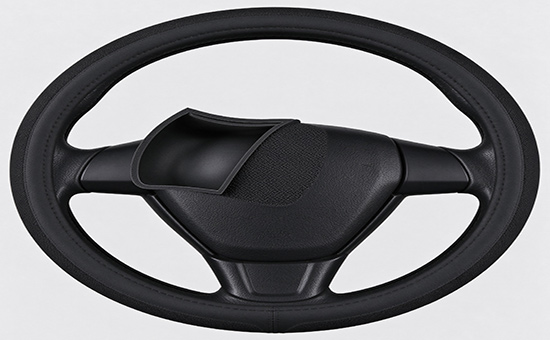
4. Key points for processing tire reclaimed rubber mixed into car steering wheel handles
When tire reclaimed rubber is used together with natural rubber or styrene-butadiene rubber to produce automotive steering wheel handles, it is essential to strictly control the feeding sequence, mixing temperature, and degelation temperature to ensure that the reclaimed tire rubber, base rubber, and various additives are fully dispersed. During the vulcanization process, the temperature and time are determined according to the vulcanization characteristics of the compound to avoid under-sulfurization causing insufficient product strength or over-sulfurization that reduces elasticity and flex resistance.
The key to reducing costs by using tire reclaimed rubber on automotive steering wheel handles is not increasing the proportion of additives, but controlling the quality of reclaimed rubber, optimizing the combined system, and stabilizing the production process. It checks the wet friction performance, wear resistance, repeated bending performance, tensile strength, hardness, permanent deformation of compression, and changes in performance after hot air aging, fully leveraging the cost advantages of tire reclaimed rubber while ensuring product performance.
Exclusive original article [commercial authorization] reprint, excerpt and excerpt in any form are prohibited without written authorization. Focus on Hongyun rubber: learn the process formula and raw material technology of producing rubber products from recycled rubber to help you reduce costs and increase profits