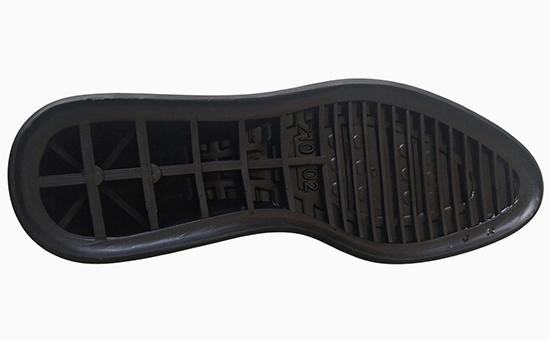
Black rubber soles are widely used in work safety shoes, cloth shoes, casual shoes, and some industrial shoes. The rubber material is required to have good wear resistance, elasticity, flex resistance, and processing performance. Generally, they are made primarily from natural rubber, and reasonably mixing in recycled rubber can effectively reduce raw material costs. In actual production, both latex recycled rubber and tire recycled rubber can be used for black rubber soles. So which one is more suitable?
1. Black Latex Recycled Rubber: Suitable for producing black rubber soles that require high elasticity and flexibility
Latex recycled rubber is made from waste natural rubber, waste latex, and related products. It features good elasticity, high strength, and high elongation at break, and is highly compatible with natural rubber. It can partially or fully replace natural rubber to produce black rubber soles that require softness, bending performance, and wearing comfort, and it is easy to color. The amount of latex recycled rubber can be adjusted according to requirements for hardness, tensile strength, and flex resistance.
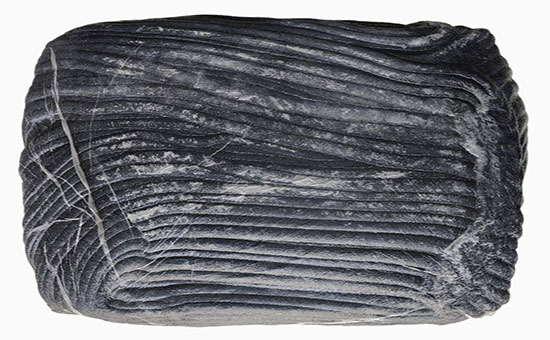
2. High-Strength Tire Recycled Rubber: Suitable for producing economical black rubber soles with high wear resistance
High-strength tire recycled rubber is made from waste tire tread powder above 900 mesh, processed through desulfurization, refining, and other procedures. It has high strength, wear resistance, and tear resistance, and can be used along with natural rubber or styrene-butadiene rubber to produce black rubber soles requiring wear resistance, especially safety shoes, ordinary wear-resistant soles, etc., reducing raw material costs. The exact mixing ratio depends on the usage environment and performance demands of the rubber sole (elasticity, tensile strength, tear properties, and dynamic fatigue performance, etc.).
3. Choosing among Latex Recycled Rubber and Tire Recycled Rubber for Black Rubber Soles
Latex recycled rubber and tire recycled rubber serve different purposes in black rubber soles. Latex recycled rubber is suitable for soles requiring elasticity, flexibility, and elongation, especially in systems combined with natural rubber. Tire recycled rubber is more suitable for ordinary black soles emphasizing wear resistance and raw material cost control. To balance elasticity, wear resistance, and economy, it's recommended to use latex and tire recycled rubber together.
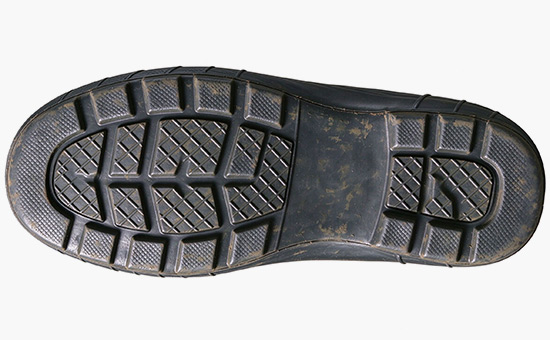
4. Key Points for Formulation and Manufacturing Adjustments When Using Recycled Rubber in Black Rubber Soles
(1) Formulation Design
When using recycled rubber to reduce costs, a well-designed formulation is essential to balance cost and quality. The vulcanization system is recommended to use a standard sulfur-accelerator system. Reinforcement usually uses carbon black, choosing the appropriate type based on sole hardness and wear requirements, and fillers like calcium carbonate can be used reasonably. In the softening system, the additive amount should be controlled to prevent excessive softening agents from affecting sole strength and wear resistance.
(2) Manufacturing Process
When producing black rubber soles with a mix of natural rubber, synthetic rubber, and recycled rubber, it's necessary to ensure the recycled rubber is fully dispersed with the raw rubber and additives, control the milling temperature, and avoid overheating the rubber material. The vulcanization process should be set according to the rubber's curing characteristics, ensuring even vulcanization throughout the sole.
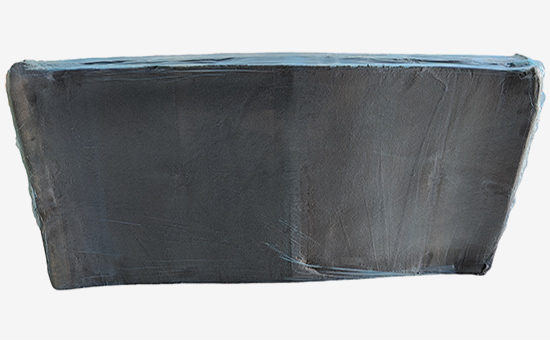
When using recycled rubber to cut costs in black rubber soles, whether choosing latex recycled rubber or tire recycled rubber, it's important not to focus only on the purchase price per ton. The comprehensive cost of qualified products should consider material consumption, processing efficiency, yield, and service life. It's recommended to conduct small-scale formulation tests, trial production, and finished product performance testing to determine the appropriate type and proportion of recycled rubber, achieving a balance among cost reduction and quality stability.
Exclusive original article [commercial authorization] reprint, excerpt and excerpt in any form are prohibited without written authorization. Focus on Hongyun rubber: learn the process formula and raw material technology of producing rubber products from recycled rubber to help you reduce costs and increase profits