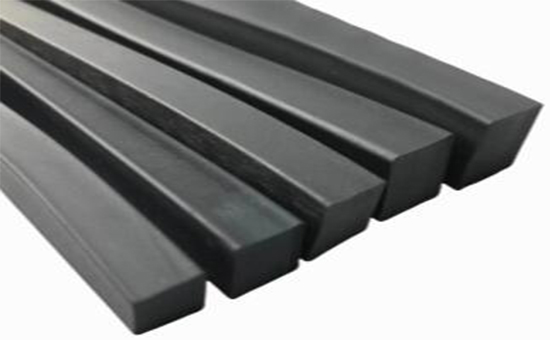
When rubber sealing strips made primarily from natural rubber want to reduce costs using recycled rubber, they often hesitate among “latex recycled rubber” and “tire recycled rubber.” These two types of recycled rubber differ significantly in terms of raw material sources, main components, performance characteristics, and price. In rubber sealing strip production, they affect finished product hardness, elasticity, compression deformation, aging resistance, and extrusion processing differently. Sealing strip manufacturers choose the appropriate recycled rubber based on product performance requirements and cost budget.
1. Latex recycled rubber is suitable for producing rubber sealing strips that require high elasticity
Latex recycled rubber is made from waste natural rubber, waste latex, and their products, processed through crushing, desulfurization, filtration, refining, and other steps. Its main component is rubber hydrocarbons. High-quality natural latex recycled rubber can contain over 75% rubber hydrocarbons, retaining the basic properties of natural rubber, including good hand feel, high tensile strength, and high elongation at break. It is more suitable for producing rubber products that demand high elasticity, resilience, and flexibility. Especially for sealing strips that need to maintain a certain recovery ability after repeated compression, latex recycled rubber has a clear advantage.
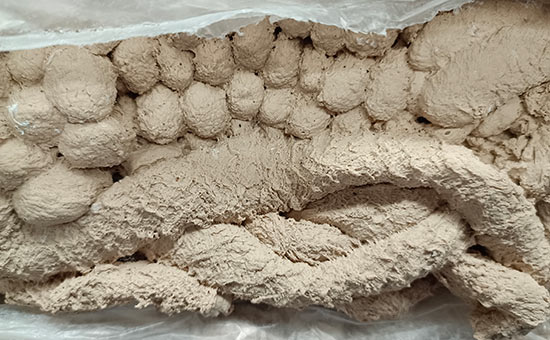
For light-colored rubber sealing strips made primarily from natural rubber, choosing white latex recycled rubber is recommended to reduce raw material costs, as it is light in color, easy to color-match, and not prone to discoloration.
2. Using tire recycled rubber to produce rubber sealing strips offers more obvious cost and wear resistance benefits
Tire recycled rubber is made from waste tire rubber powder. Its main components are natural rubber, general synthetic rubbers (like styrene-butadiene rubber and polybutadiene rubber), and carbon black. It has good wear and flex resistance, wide raw material availability, and low price. It can be used alone or mixed with natural rubber, SBR, etc., to produce ordinary industrial sealing strips, wear-resistant rubber strips, machine equipment seals, and cost-sensitive sealing strips. Tire recycled rubber generally has good processing flow, which can improve the cost structure of the rubber compound.
3. When designing recycled rubber sealing strip formulas, don’t just look at the price of recycled rubber
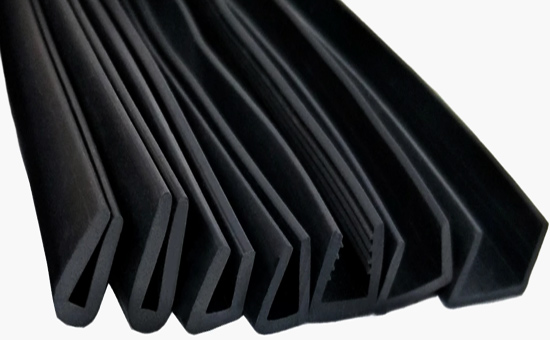
When producing rubber sealing strips using latex or tire recycled rubber, you can’t just focus on the purchase price of the recycled rubber; you need to calculate the overall cost per unit product. If the sealing strip requires good flexibility and resilience, the proportion of latex recycled rubber can be appropriately increased, and if necessary, mixed with natural rubber to improve the product’s strength and elasticity. For sealing strips where ordinary sealing, dust resistance, wear resistance, and cost control are the priorities, tire recycled rubber is recommended, and hardness and rigidity can be adjusted using fillers like carbon black or calcium carbonate.
It’s important to note that adding too much oil to the rubber compound may make mixing easier and reduce material costs but will make the rubber too soft, causing size shrinkage and poor surface quality after extrusion. Recycled rubber already contains some softening components, so these factors should be considered when designing the formula rather than directly applying the full natural rubber formula mechanically.
4. Tips for choosing latex or tire recycled rubber for rubber sealing strips
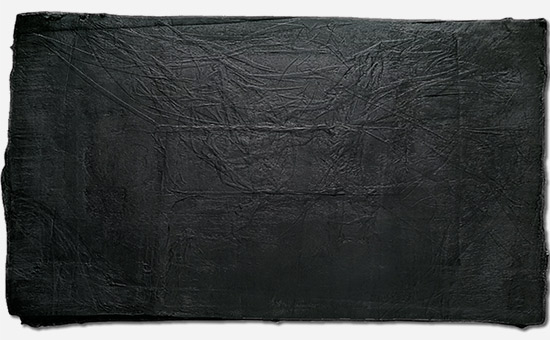
When choosing recycled rubber, manufacturers need to pay attention to particle fineness, ash content, tensile strength, elongation at break, hardness, impurities, Mooney viscosity, and batch stability to choose suitable recycled rubber products based on the specific needs of the sealing strips: fineness of 60–80 mesh and impurity-free recycled rubber is helpful for smooth extrusion. If recycled rubber quality fluctuates significantly, the plasticity, vulcanization speed, and final product hardness of the extruded compound will vary. It’s recommended to perform spot checks on each batch.
5. Key points when using latex or tire recycled rubber for rubber sealing strips
When using latex recycled rubber, strictly control the softness of the compound and extrusion dimensions, especially for complex-section, high-requirement strips. A too-soft compound reduces extrusion rigidity and dimensional stability. When using tire recycled rubber, focus on compound dispersion and smoothness of the extruded surface. During extrusion, excessive speed or too high die temperature can cause die swell and dimensional variations. Insufficient vulcanization temperature leads to undercured strips, while high temperature or prolonged time may result in overcuring, affecting elasticity and permanent compression deformation.
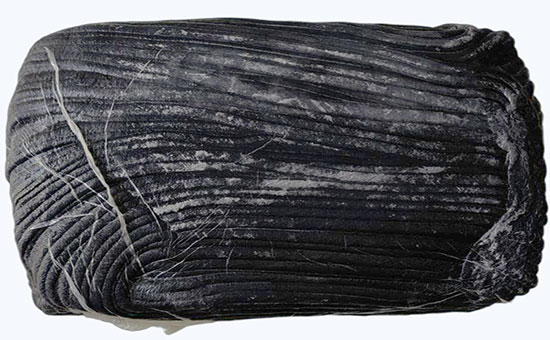
In actual production, both latex and tire recycled rubber can replace the appropriate proportion of natural rubber for producing sealing strips. The right recycled rubber is chosen based on the required hardness, elasticity, wear resistance, permanent compression deformation, appearance, and cost. For sealing strip manufacturers, recycled rubber is not just a cheap substitute but an engineering-grade raw material to be used according to product positioning.
Exclusive original article [commercial authorization] reprint, excerpt and excerpt in any form are prohibited without written authorization. Focus on Hongyun rubber: learn the process formula and raw material technology of producing rubber products from recycled rubber to help you reduce costs and increase profits